
Lawn care built for Dallas-Fort Worth, not anywhere else
Dallas lawn care made for North Texas clay, heat, and watering rules. See how Flamingo Pros builds a custom plan for your grass, soil, and shade.
The Flamingo Pros lawn team
10 min read · October 22, 2026
On this page
- No cookie-cutter plans. Your lawn gets its own.
- The big three DFW grass types
- Texas soil and DFW weed control
- Pests and fungal diseases in DFW lawns
- Water management with the cycle and soak method
- Turf renovation starts with soil, not seed
- Why DFW homeowners choose Flamingo Pros
- Get your custom DFW lawn care plan
A beautiful lawn in North Texas is earned. Summers here climb past 100 degrees. Our clay soil holds water like a brick, then cracks wide open when it dries. Cities limit sprinklers to two days a week. And the local weeds, bugs, and fungus know exactly when to strike.
That's why a one-size-fits-all program from a national chain rarely works in Dallas or Fort Worth. At Flamingo Pros, our team builds every plan around North Texas: its micro-climates, its soil, its watering rules, and the specific yard in front of us.
Here's what makes DFW lawns different, and how we turn that local knowledge into a lawn you love coming home to.
No cookie-cutter plans. Your lawn gets its own.
Two homes on the same street can need completely different care. One has full-sun Bermuda. The next has St. Augustine under a big live oak. One drains well after a storm. The other sits on heavy clay that puddles for days.
So we start with your lawn's profile, not a template. Every Flamingo Pros plan is built around:
- Your grass type. Bermuda, St. Augustine, and Zoysia each need different mowing heights, feeding, and water.
- Your shade levels. Sun and shade change how fast grass grows, how much water it uses, and which problems show up.
- Your soil health. We test your soil before your first service, so every treatment matches what your lawn actually needs.
- Your yard's micro-climate. Slopes, tree cover, drainage, and heat reflecting off driveways all change what a lawn needs.
Then we adjust your plan as the seasons turn. That's what real Texas turf management looks like. See how it comes together in our seasonal lawn treatment and weed control service.
The big three DFW grass types
Most lawns in Dallas-Fort Worth are one of three warm-season grasses. Each one thrives with the right care and struggles with the wrong care.
Bermuda grass loves the sun
- Needs full sun. Bermuda wants at least six hours of direct sun a day. It thins out fast in shade.
- Likes it short. Kept at about 1 to 2 inches, Bermuda grows thick and sideways, which crowds out weeds.
- Handles drought well. It turns tan and goes dormant in winter and in hard droughts, then greens back up.
- Spreads quickly. That helps it bounce back from wear, but it also creeps into flower beds.
St. Augustine grass needs height to beat the heat
- The go-to grass for shady yards. St. Augustine handles partial shade better than Bermuda and most Zoysia.
- Mow it high. At 3 to 4 inches, taller blades shade the soil, keep roots cooler, and hold moisture through Texas summers.
- Never scalp it. Cutting St. Augustine short stresses the plant and invites weeds and chinch bugs.
- Thirstier and hungrier. Its wide blades make a lush carpet, but it needs more water and fertilizer than Bermuda.
Zoysia grass is the dense middle ground
- Soft and thick. Zoysia forms a dense, carpet-like lawn that feels great underfoot.
- Flexible with light. Many varieties handle both sun and some shade.
- Mows a little short. Usually 1 to 2 inches, depending on the variety.
- Slow and steady. It grows slowly, so you mow less, but it also recovers from damage more slowly and costs more up front.
Why this matters: a mowing height that's perfect for Bermuda can ruin St. Augustine. Your plan follows your grass, not a generic schedule. For a side-by-side look at cost and care, read Bermuda vs. St. Augustine vs. Zoysia.
Thinking about a new lawn? We'll help you choose the grass that fits your sun, shade, and budget with professional sod installation.
Texas soil and DFW weed control
The challenge of Blackland Prairie clay
Much of Dallas and the eastern Metroplex sits on Blackland Prairie clay. It's rich in minerals, but it's also dense and alkaline. That causes three common problems:
- Compaction. Clay packs tight, so water runs off instead of soaking in.
- Shallow roots. Roots struggle to push down through hard soil, which leaves grass weak in summer heat.
- Locked-up nutrients. Alkaline soil can block nutrients like iron. That's why some lawns stay yellow even after fertilizer.
Soils also shift as you head west toward Fort Worth. It's one more reason we test your soil instead of guessing. Learn more in our DFW soil testing guide.
Summer's unholy trinity: Dallisgrass, Nutsedge, and Crabgrass
These three weeds cause more DFW summer headaches than any others:
- Crabgrass sprouts from seed once spring soil warms up. It loves thin, stressed lawns and spreads fast in the heat.
- Dallisgrass grows in coarse clumps with tall seed heads that pop up just days after you mow. It comes back from the same crown every year.
- Nutsedge is bright green, grows faster than your lawn, and has triangular stems. It spreads through tubers underground.
Winter invaders: Poa annua and Henbit
When your warm-season grass goes dormant, cool-season weeds move in:
- Poa annua (annual bluegrass) forms light green clumps with white seed heads that stand out against tan, dormant Bermuda.
- Henbit has square stems and small purple flowers, and it takes over bare spots in late winter and early spring.
Why pre-emergent timing is the secret to a weed-free lawn
A pre-emergent forms a barrier in the top layer of soil that stops weed seeds from taking root as they sprout. Timing is everything. Apply it too early and it breaks down before the seeds germinate. Apply it too late and the weeds are already up.
We time two key applications to DFW soil temperatures, not the calendar:
- Spring (usually late February to mid-March): stops crabgrass and other summer weeds before they start.
- Fall (usually September, as soil cools toward 70°F): stops Poa annua, henbit, and other winter weeds.
Pre-emergent works on weeds that grow from seed. Established Dallisgrass and Nutsedge return from crowns and tubers, so we spot-treat them with targeted products during the growing season. Knowing exactly which weed you have is what decides which approach works.
Our seasonal lawn treatment and weed control handles that timing for you. To identify what's growing in your yard, see Know your weeds.
Pests and fungal diseases in DFW lawns
Brown spots aren't always dry grass
In July, every brown spot looks like a watering problem. Often it is. But sometimes extra water makes the real problem worse. Here's what else could be behind it.
Common DFW lawn insects
- Chinch bugs are tiny insects that suck the sap out of St. Augustine. Damage starts as yellow patches in hot, sunny spots near pavement, then turns brown and spreads. Watering doesn't green it back up.
- Armyworms are caterpillars that march across a lawn in groups, chewing blades down. They can strip a lawn in days, usually in late summer and fall.
- Grub worms are white, C-shaped larvae of June beetles. They eat roots from below, so damaged turf peels up like loose carpet.
Common DFW lawn diseases
- Brown patch shows up as circles of yellow or brown grass, mostly in St. Augustine, during cool, wet weather in spring and fall. Watering at night helps it spread.
- Take-All Root Rot (TARR) attacks the roots of St. Augustine and Bermuda. It leaves irregular yellow patches and short, dark, rotted roots. Wet weather and alkaline soil make it worse.
We diagnose the cause, not just the symptom
Chinch bug damage and drought stress look almost the same. So do brown patch and TARR. Treat the wrong problem and you waste time and money while the real one spreads.
That's why every visit includes an inspection. Our team looks at the blades, roots, soil, and pattern of damage, then notes anything that needs attention in your lawn-health report in the Flamingo Pros app. You know what's really going on before you spend money on the wrong fix.
Water management with the cycle and soak method
Why 15 minutes straight doesn't work in clay
Clay soil absorbs water slowly, often much slower than your sprinklers put it down. Run a zone for 15 minutes straight and much of that water ends up on the sidewalk and in the storm drain. The surface looks wet while the roots stay thirsty.
Short, shallow watering also trains shallow roots. Those are the first to fry in August.
How cycle and soak trains deep roots
Instead of one long run, split each zone's watering time into short cycles with a rest in between:
- Run each zone for about a third of its total time.
- Let the water soak in for 30 to 60 minutes.
- Repeat two more times.
Each pass soaks deeper than the last. Roots follow the water down, and deep roots handle heat and drought far better. Most DFW lawns need about an inch of water per week in summer, including rain.
Making every watering day count
Dallas and Fort Worth both limit sprinklers to twice a week, on days set by your address. Both cities also ban sprinkler watering between 10 a.m. and 6 p.m. during all or part of the year, and runoff or broken sprinkler heads can lead to fines. Many surrounding cities follow similar rules.
With only two days a week, every watering has to count.
Check your sprinklers before summer
Broken heads, clogged nozzles, and sprinklers spraying the driveway waste water and leave dry spots. Before the heat arrives, run each zone and watch for:
- Heads that don't pop up or spray crooked
- Water hitting the driveway, sidewalk, or street
- Puddles or runoff before a cycle ends
- Dry patches the spray never reaches
Fix what you can, or call a licensed irrigator for bigger repairs. Then set a cycle and soak schedule matched to your soil and grass. If our team spots dry patches or runoff during a visit, we'll flag it in your lawn-health report.
Turf renovation starts with soil, not seed
Why seed alone won't fix a DFW lawn
Thin, patchy lawns in North Texas usually have a soil problem underneath. Compacted clay squeezes out air, blocks water, and crowds roots. Seed scattered on hard clay rarely takes, and St. Augustine isn't grown from seed at all. Real renovation fixes the soil first.
Core aeration lets your lawn breathe
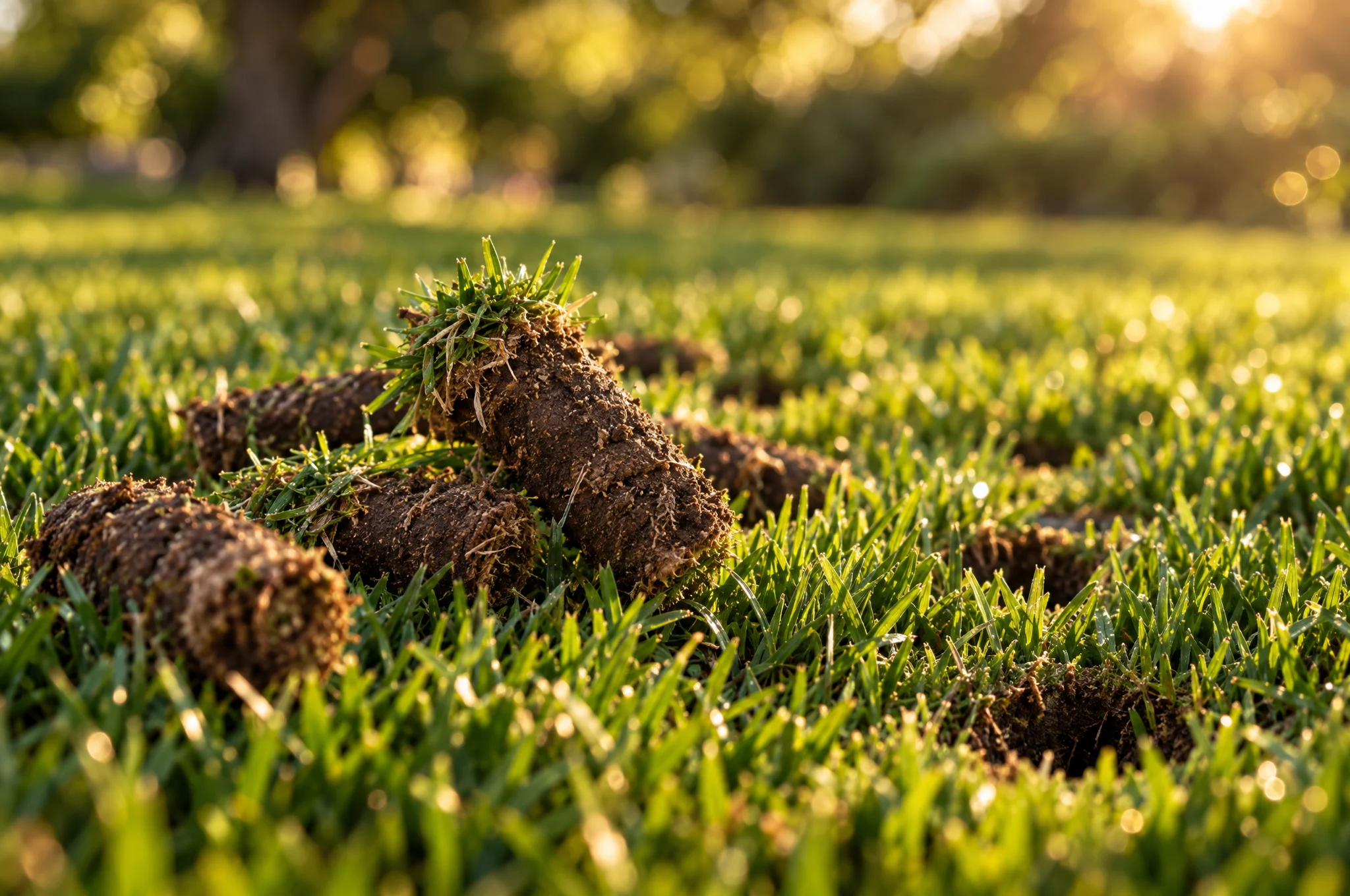
Core aeration pulls small plugs of soil out of your lawn. Those openings let air, water, and nutrients reach the roots, and give roots room to grow deeper. The cores break down on the surface on their own. For warm-season grasses, we aerate from late spring into early summer, while the grass is actively growing and can fill in quickly.
For compacted DFW clay, it's the single best thing you can do for your lawn. Explore our core aeration service, or read how to fix compacted clay soil.
Compost topdressing builds better soil
Some homeowners follow aeration with a thin layer of compost, which falls into the open holes. Over time, that organic matter loosens heavy clay and supports healthier soil underneath your grass.
Fresh sod repairs damaged yards
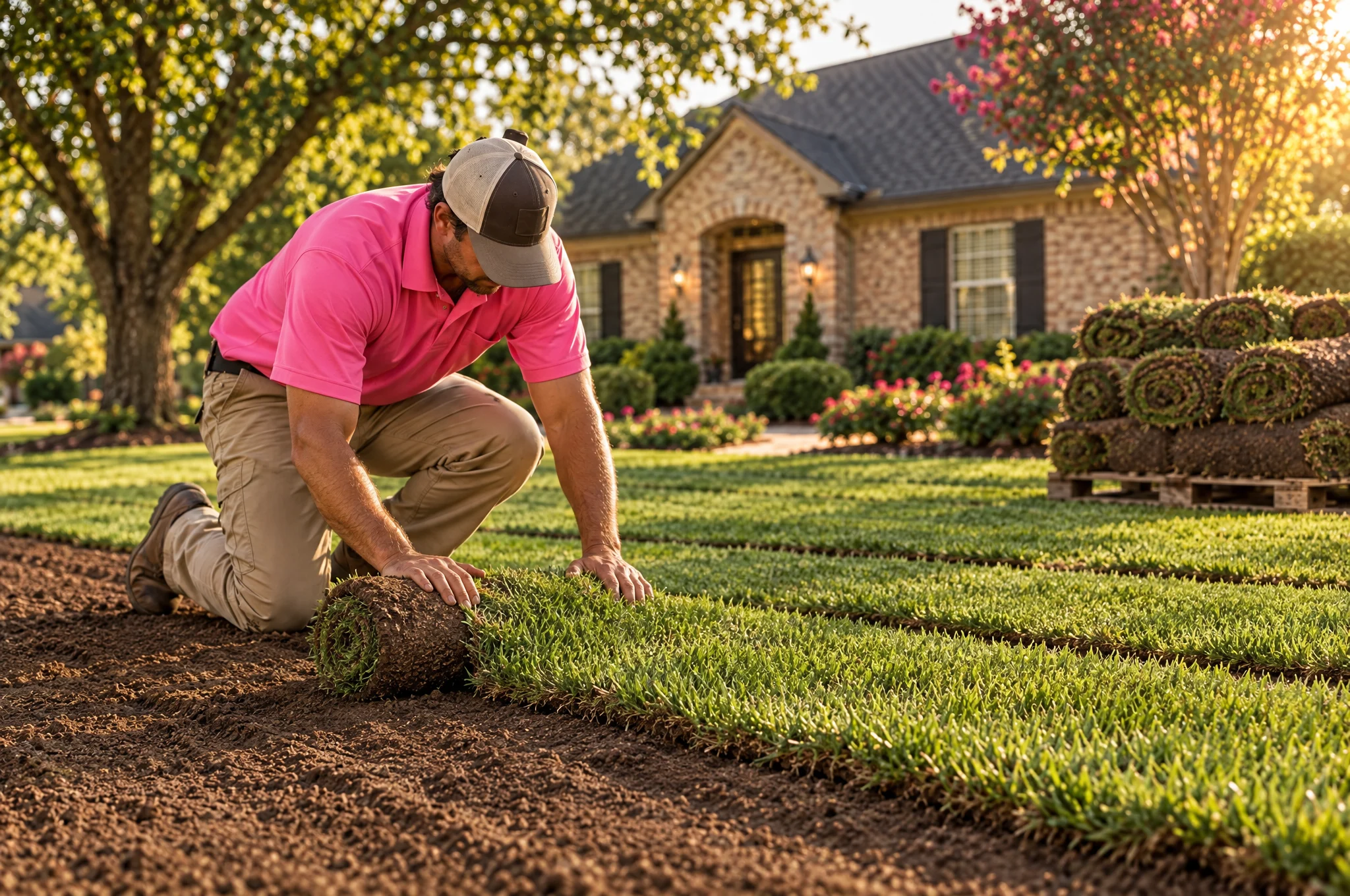
When grass is too far gone, new sod is the fastest fix. It gives you a finished lawn right away, with no waiting on seed that may never take in clay. We install Bermuda, St. Augustine, and Zoysia sod, and match the grass to your yard's sun and shade so it lasts. See sod installation.
Why DFW homeowners choose Flamingo Pros
Great Dallas lawn care and Fort Worth landscaping start with healthy turf. Here's how we deliver it:
- Locally owned and operated. We live with the same heat, clay, and watering rules you do.
- Plans built on data. We test your soil before your first service, after your first cycle, and every year after that.
- Visits timed to Texas seasons. The Green & Pink Plan includes eight seasonal fertilization and weed control visits.
- A report after every visit. See your lawn's health, what we applied, and what needs attention, right in the app.
- A team you can trust. Our team members are trained, background-checked, and focused on great customer service.
Get your custom DFW lawn care plan
Your lawn doesn't need another generic program. It needs a plan built for its grass, its shade, its soil, and the Texas season ahead.
The spring pre-emergent window opens in late February. Miss it, and crabgrass gets a head start you'll fight all summer.
Contact Flamingo Pros today for a property evaluation and your custom lawn care plan. Sign up for the Green & Pink Plan by February 28, 2027, and your core aeration is free.
Photo credits
- Cover: brick home with a green lawn. Get Lost Mike, Pexels, Pexels license (free to use).
Skip the guesswork every season.
Year-round care
The Pink Plan
Eight seasonal visits a year
Included in plan
- Seasonal fertilization & weed control
- Inspection at every visit
- Treatments timed to your lawn’s needs
- Soil tests at your first and last treatment
- An online Lawn Profile with your soil results
Aeration benefits
- Relieves the compacted clay soil common in North Texas
- Helps air and water reach roots
- Helps treatments absorb into the soil for more consistent, visible results
- Helps your grass stand up straighter
Your price
$129/ month
12 monthly payments, $1,548 a year.
- Lot size
- Up to 15,000 sq ft
- Billing
- Monthly
- + Soil Testing
Regular price $158FREE - + Lawn Core Aeration
Regular price $299FREE
One core aeration a year is part of the plan.

Service
Seasonal lawn treatment
Seasonal fertilization and weed control, timed to your lawn's needs, with an inspection at every visit.
Learn more about seasonal lawn treatmentIdeal window
$129/mo
The Pink Plan, for lots up to 15,000 sq ft
Service
Lawn core aeration
Relieves soil compaction so air, water and treatments reach the roots. Scheduled outside the DFW dormant season.
Learn more about lawn core aerationIdeal window
Size tier
Up to 5,000 sq ft
$249/ one-time
Service
Lawn Profile
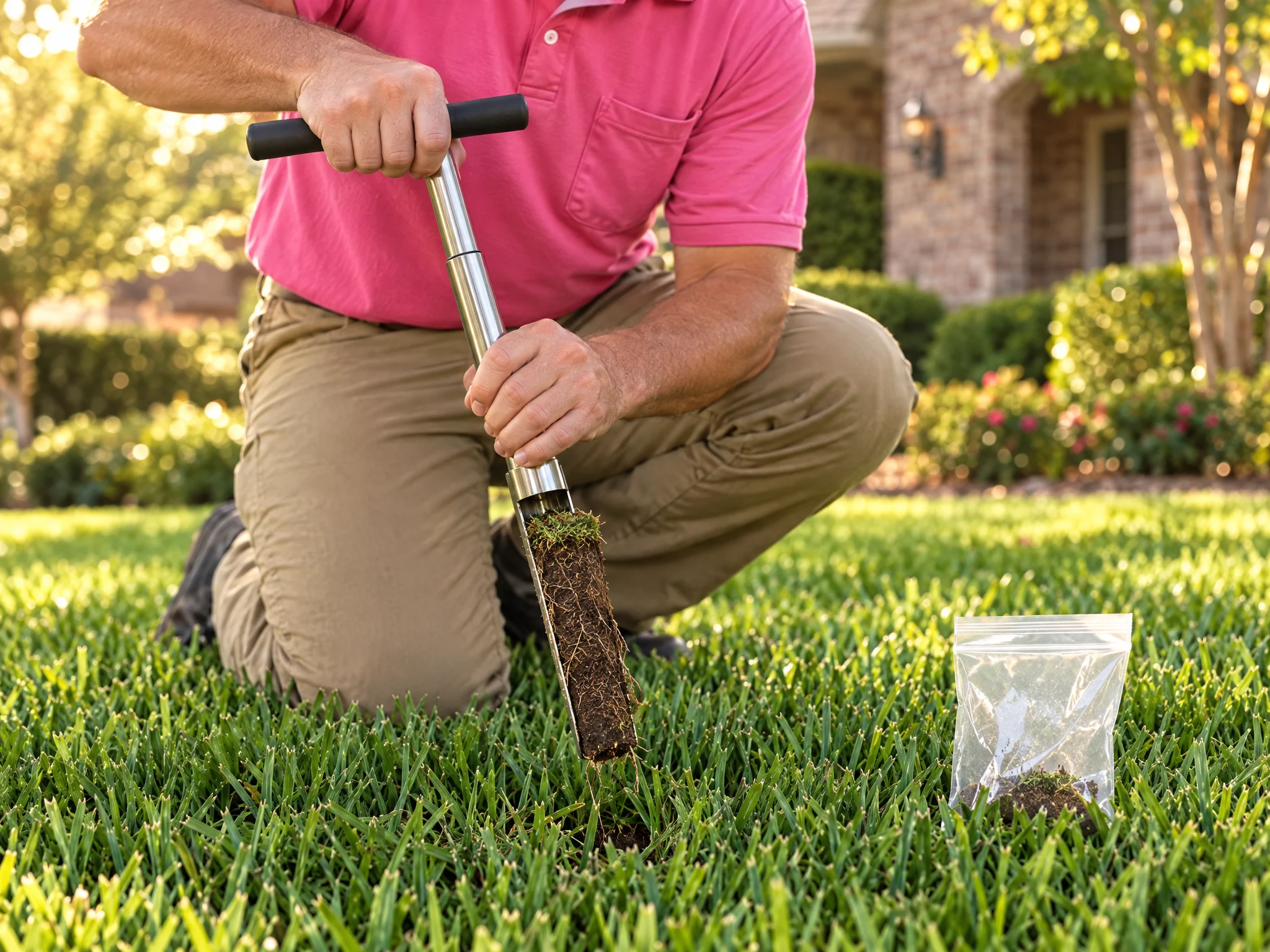
Soil samples pulled from across your lawn and tested by a lab, with results in your online Lawn Profile.
Learn more about lawn profileIdeal window
Size tier
Up to 5,000 sq ft
$79/ test
Service
Turf installation
Fresh sod in Bermuda, St. Augustine or Zoysia, priced per square foot installed.
Learn more about turf installationIdeal window
From$2.25/ sq ft
Keep reading

Should I water my DFW lawn in winter? And if so, how much?
Should you water your DFW lawn in winter? Yes, but 50% to 75% less. How often to water dormant Bermuda, St. Augustine, and Zoysia, plus freeze tips.
7 min read · October 22, 2026

Guesswork vs. Data: Why Soil Testing is the Secret to a Lush DFW Lawn
Why DFW's alkaline clay makes guessing expensive, the real benefits of soil testing for Texas lawns, and how Flamingo Pros tests your soil when service starts and periodically each year to track soil health.
8 min read · October 20, 2026

Beyond the Green: The DFW Homeowner's Guide to Lawn Colorants
Dye vs. paint vs. pigment explained, a four-season colorant plan for Bermuda, St. Augustine and Zoysia, and why golf courses use colorant instead of water-hungry winter overseeding.
8 min read · October 20, 2026