
Bermuda vs. St. Augustine vs. Zoysia: the right grass for your DFW yard
How to tell North Texas's three favorite lawn grasses apart, how each handles clay, shade, dogs and August heat, and which one fits your yard.
The Flamingo Pros lawn team
7 min read · October 19, 2026
On this page
Drive any DFW street and you'll see three grasses doing most of the work: Bermuda, St. Augustine and Zoysia. All three are warm-season grasses. They green up in spring, grow hard through summer and go dormant after frost. Past that, they behave very differently.
The right one depends on how much sun your yard gets, who plays on it, and how much care you want to give it. Here's how our lawn team sizes them up for North Texas yards.
The short version:
| Grass Type | Pallet Price (450 sq. ft.) | Maintenance & Water | Sun Preference | Ideal Mowing Height |
|---|---|---|---|---|
| Bermuda | $ | High mowing frequency, low water | Full sun, 6 to 8 hrs | 1 to 2.5 in |
| St. Augustine | $$ | High water & fertilizer needs | Partial shade, 4 to 6 hrs | 2.5 to 4 in |
| Zoysia | $$$ | Lower mowing/fertilizer, higher upfront cost | Full sun to partial shade, 5 to 8 hrs | 1 to 2.5 in |
The DFW reality check: clay, high pH and August
Before you pick a grass, know what it has to live with.
- Heavy clay. Much of DFW sits on dense clay that holds water when it rains and turns hard when it dries.
- Alkaline soil. Many North Texas soils run high in pH. St. Augustine is the most sensitive of the three here. Texas A&M AgriLife notes it often yellows from iron deficiency in soils above pH 7.5.
- August heat. Long stretches of heat and watering limits test every lawn. How a grass handles drought matters as much as how it looks in May.
- Winter cold snaps. AgriLife notes severe winters in the northern third of Texas, which includes DFW, can kill St. Augustine.
A soil test through your county Extension office or the Texas A&M Soil Testing Lab tells you your pH before you buy sod.
Bermuda grass: the high-traffic athlete
How to identify it
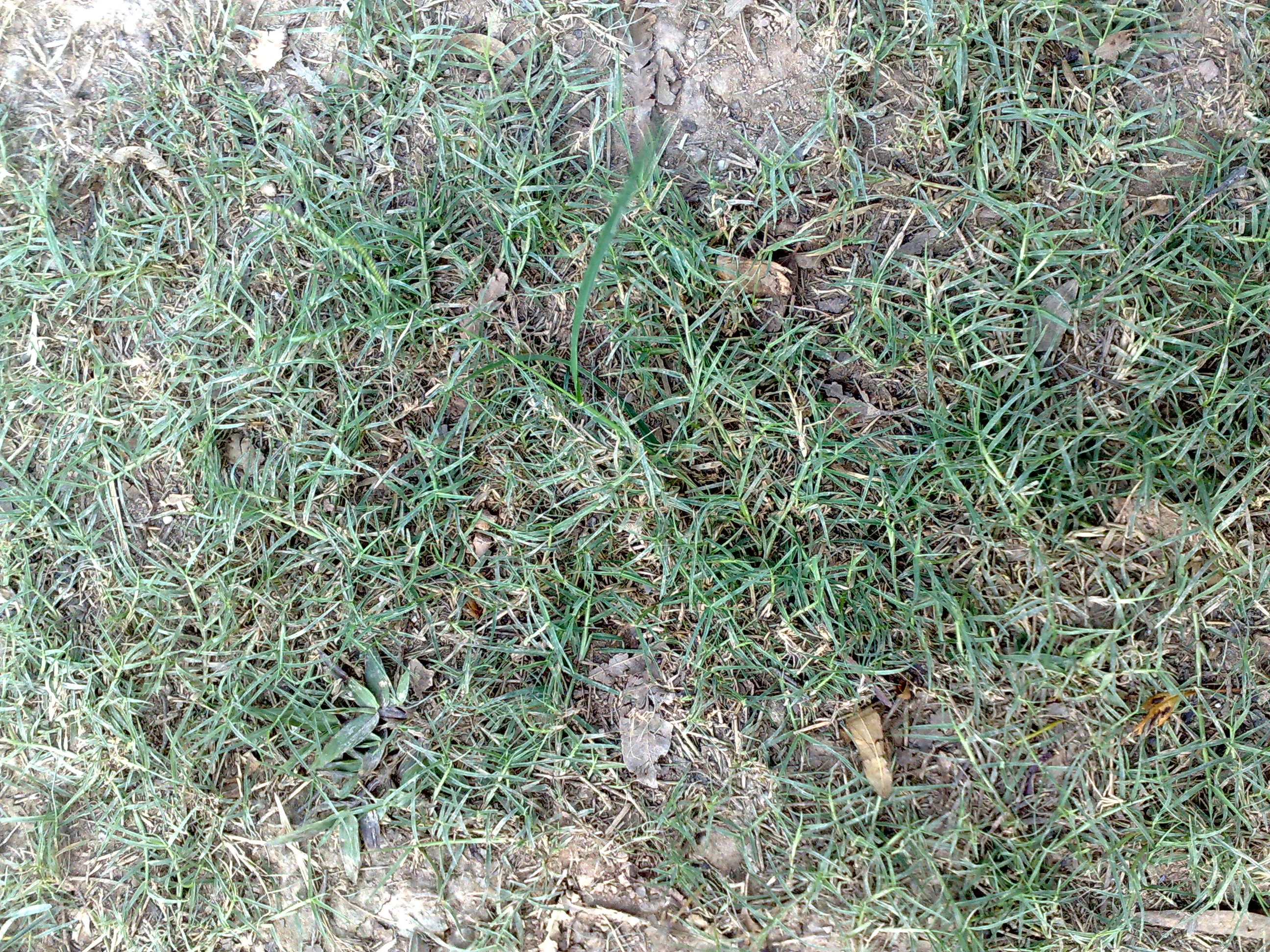
- Fine to medium texture with thin, pointed blades.
- Hybrid varieties are finer, denser and darker green. Common Bermuda is lighter and a bit coarser.
- Spreads two ways: stolons (runners above ground) and rhizomes (runners below ground). That's why it fills in so fast.
How to care for it
- Sun: full sun. AgriLife lists a minimum of 6 to 8 hours of direct light.
- Mowing: keep it short, about 1 to 2.5 inches. AgriLife recommends 1 to 2 inches for most home lawns cut with a rotary mower.
- Frequency: in summer, plan on mowing weekly or more. Never cut off more than one-third of the blade at once.
- Water: highly drought tolerant once established. In a long dry spell it can go dormant and green back up when water returns.
Pros and cons
What it does well:
- Recovers fast from wear, divots and dog tracks.
- Handles heat and drought better than the other two.
- Stands up to heavy foot traffic from kids, dogs and backyard games.
Where it falls short:
- Struggles badly in shade. AgriLife rates its shade tolerance low.
- Its runners creep into flower beds and across edging. Plan on regular edging and a solid bed border.
- Needs frequent mowing in peak season to stay dense and tidy.
St. Augustine grass: the shady carpet

How to identify it
- Broad, flat, coarse blades with rounded tips.
- Light to medium green.
- Spreads only by thick, visible stolons that run along the soil surface. It has no rhizomes.
How to care for it
- Sun: the most shade tolerant warm-season grass, per AgriLife. It still needs about 4 to 6 hours of light a day.
- Mowing: keep it tall, about 2.5 to 4 inches. AgriLife suggests setting your mower at its highest setting or one notch below. Taller blades shade out weeds and build deeper roots.
- Water: moderate. It's less drought tolerant than Bermuda or Zoysia and needs steadier watering through summer.
- Iron: in alkaline DFW soil, yellowing between the veins often means iron deficiency. AgriLife notes a foliar iron spray works better than granular iron in high-pH soil.
Pros and cons
What it does well:
- Handles shade better than any other warm-season lawn grass.
- Grows a thick canopy that crowds out weeds.
- Feels soft and lush underfoot when it's healthy.
Where it falls short:
- Poor traffic tolerance. It's slow to repair from dog paths and heavy play.
- Chinch bugs love it in hot, dry weather. Damage looks like drought stress, often near driveways and sidewalks first.
- It's very susceptible to a fungus many Texans call brown patch. AgriLife calls it large patch on warm-season grass. It strikes in spring and fall when temperatures drop below 70 degrees.
- Without rhizomes, St. Augustine has a harder time coming back from severe drought.
A North Texas tip: AgriLife notes the Floratam variety has the poorest cold tolerance, which makes it a better fit for South Texas. Ask your sod supplier for a variety suited to North Texas.
Zoysia grass: the premium upgrade
How to identify it

- Dense growth with stiff, pointed blades that roll up under drought stress.
- Texture depends on the type:
- Zoysia japonica, such as Palisades, is medium-textured and handles normal lawn care.
- Zoysia matrella, such as Zeon, is fine-textured and very dense. It needs closer, more frequent mowing, and a reel mower gives the cleanest cut.
- Spreads by both stolons and rhizomes, but slowly.
How to care for it
- Sun: AgriLife lists a minimum of about 5 to 8 hours, depending on variety. Its shade tolerance falls between Bermuda and St. Augustine.
- Mowing: 1 to 2.5 inches for medium-textured types and 1 to 2 inches for fine-textured types. It grows slowly, so you'll mow less often than Bermuda.
- Water: drought tolerant. AgriLife researchers in Dallas kept Palisades at acceptable quality on clay soil with about half the water a fully watered lawn would use. It does turn brown sooner than Bermuda in a long drought.
- Thatch: Zoysia builds thatch, a spongy layer of stems and roots. Once it passes half an inch, plan to dethatch. Fine-textured types need it more often.
- Mower blades: Zoysia is tough to cut. Sharpen blades more often to avoid shredded tips.
Pros and cons

What it does well:
- The dense, cushioned, barefoot feel of a golf course.
- A balance of moderate shade tolerance and good traffic tolerance.
- Its density naturally resists weeds.
- Needs less fertilizer and less mowing than Bermuda.
Where it falls short:
- Sod usually costs more up front than Bermuda or St. Augustine.
- Slow growth means slow recovery. Damaged spots take a long time to fill in.
- Also susceptible to large patch in spring and fall.
- Traffic tolerance is good, not Bermuda-level. AgriLife calls it best for moderate traffic.
Side-by-side at a glance
Based on Texas A&M AgriLife's North Texas turfgrass guide and mowing recommendations:
| Bermuda | St. Augustine | Zoysia | |
|---|---|---|---|
| Min. sun | 6 to 8 hrs | 4 to 6 hrs | 5 to 8 hrs |
| Shade | Low | High | Moderate |
| Foot traffic | High | Low | Moderate to high |
| Water need | Low to moderate | Moderate | Moderate |
| Mow height | 1 to 2.5 in | 2.5 to 4 in | 1 to 2.5 in |
| Disease risk | Low to moderate | High | Low to moderate |
Which should I choose? A guide for new sod

Choose Bermuda if
- Your yard has few or no trees and gets sun from morning to evening.
- You have active dogs, kids, or a backyard that doubles as a soccer field.
- You want the fastest recovery from wear and the best drought tolerance.
- You're fine with weekly summer mowing and edging your beds.
Choose St. Augustine if
- Mature oaks, pecans or elms shade parts of your yard, but the lawn still gets 4 to 6 hours of light.
- Foot traffic is light and the lawn is mostly for looks.
- You can water steadily in summer and check for chinch bugs in hot spells.
Choose Zoysia if
- Your yard has a mix of sun and partial shade.
- Traffic is moderate: family use, a calm dog, weekend play.
- You have the budget for premium sod and want a dense lawn that needs less mowing.
- You're patient, since damaged areas fill in slowly.
If none of them fit
Under 4 hours of light, no warm-season grass will thrive. AgriLife suggests mulch or shade-loving plants for those spots instead of fighting for turf.
Quick DFW checklist before you lay sod
- Count the hours of direct sun in each part of the yard on a summer day.
- Test your soil pH and nutrients.
- Be honest about traffic: dogs, kids, parties.
- Decide how often you want to mow in July.
- Match grass to each zone. Sun and shade can call for different answers in the same yard.
- Lay sod when the grass is actively growing, from spring into early summer.
How Flamingo Pros can help
Whichever grass you choose, it needs fertilizing and weed control timed to DFW's seasons. Our annual lawn plan covers that across eight seasonal visits. See the plan to get started.
Sources
- Texas A&M AgriLife Extension. Warm-season turfgrasses for North Texas.
- Texas A&M AgriLife Extension. Turfgrass selection for Texas.
- Texas A&M AgriLife Extension. Bermudagrass home lawn management calendar.
- Texas A&M AgriLife. St. Augustinegrass lawn management.
- Texas A&M AgriLife Extension. Zoysiagrass lawn management guide.
- Texas A&M AgriLife. Mowing recommendations for warm-season turfgrasses.
- Texas A&M AgriLife Extension. How to diagnose and manage large patch disease.
- Neil Sperry's Gardens. Is my lawn just dormant?
Photo credits
- Cover: lawn grass close-up. rovenimages.com, Pexels, Pexels license (free to use). Cropped.
- Bermudagrass close-up: Wikimedia Commons, public domain.
- St. Augustine grass close-up: Forest and Kim Starr, Wikimedia Commons, CC BY 3.0 US.
- Meyer Zoysia plot, University of Georgia Research and Education Garden: Michael Rivera, Wikimedia Commons, CC BY-SA 4.0.
- Barefoot walk across a lawn: Ben Mack, Pexels, Pexels license (free to use). Cropped.
- Toddler playing soccer on a lawn: Ketut Subiyanto, Pexels, Pexels license (free to use). Cropped.
Skip the guesswork every season.
Year-round care
The Pink Plan
Eight seasonal visits a year
Included in plan
- Seasonal fertilization & weed control
- Inspection at every visit
- Treatments timed to your lawn’s needs
- Soil tests at your first and last treatment
- An online Lawn Profile with your soil results
Aeration benefits
- Relieves the compacted clay soil common in North Texas
- Helps air and water reach roots
- Helps treatments absorb into the soil for more consistent, visible results
- Helps your grass stand up straighter
Your price
$129/ month
12 monthly payments, $1,548 a year.
- Lot size
- Up to 15,000 sq ft
- Billing
- Monthly
- + Soil Testing
Regular price $158FREE - + Lawn Core Aeration
Regular price $299FREE
One core aeration a year is part of the plan.


Service
Turf installation
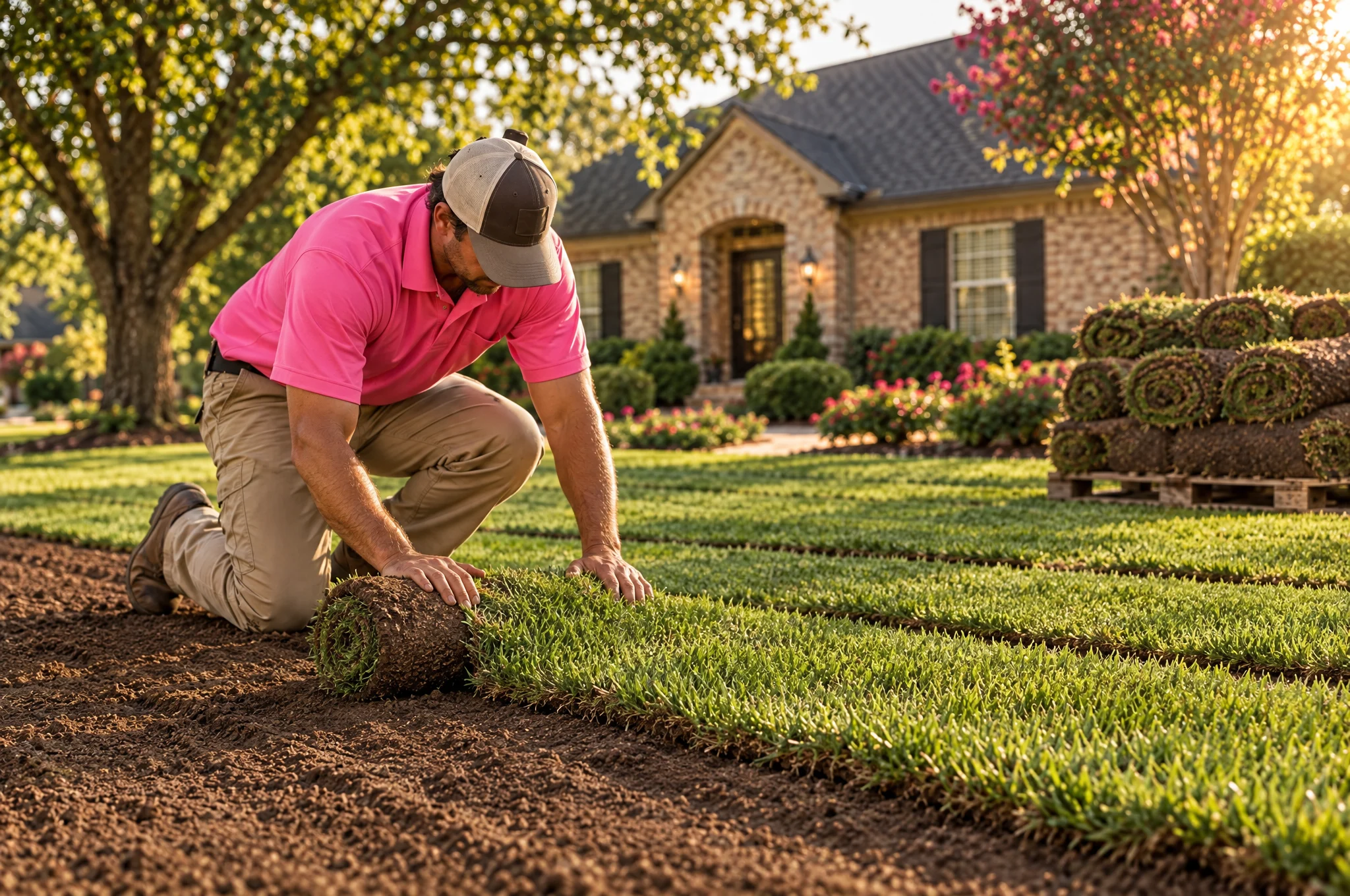
Fresh sod in Bermuda, St. Augustine or Zoysia, priced per square foot installed.
Learn more about turf installationIdeal window
From$2.25/ sq ft
Keep reading
Lawn care built for Dallas-Fort Worth, not anywhere else
Dallas lawn care made for North Texas clay, heat, and watering rules. See how Flamingo Pros builds a custom plan for your grass, soil, and shade.
10 min read · October 22, 2026

Should I water my DFW lawn in winter? And if so, how much?
Should you water your DFW lawn in winter? Yes, but 50% to 75% less. How often to water dormant Bermuda, St. Augustine, and Zoysia, plus freeze tips.
7 min read · October 22, 2026

Guesswork vs. Data: Why Soil Testing is the Secret to a Lush DFW Lawn
Why DFW's alkaline clay makes guessing expensive, the real benefits of soil testing for Texas lawns, and how Flamingo Pros tests your soil when service starts and periodically each year to track soil health.
8 min read · October 20, 2026