
Should I water my DFW lawn in winter? And if so, how much?
Should you water your DFW lawn in winter? Yes, but 50% to 75% less. How often to water dormant Bermuda, St. Augustine, and Zoysia, plus freeze tips.
The Flamingo Pros lawn team
7 min read · October 22, 2026

On this page
Your Bermuda just turned tan. The St. Augustine out front looks like straw. So should the sprinklers keep running?
Yes, but a lot less. Your grass is dormant, not dead. The roots are still alive under that brown blanket, and they still need some moisture. But a dormant lawn needs 50% to 75% less water than it did in July. For most DFW yards, that means the sprinkler system stays off most of the winter, and you water only during dry spells.
Here's how the Flamingo Pros team handles winter watering for North Texas lawns.
Why dormant grass still needs some water
Bermuda, St. Augustine, and Zoysia are warm-season grasses. As the days get shorter and cooler in late fall, they slow down, fade to tan, and go dormant until spring.
What the roots are doing
Dormant doesn't mean switched off. Below the surface, your lawn is still working slowly.
- Roots stay alive and keep taking up a little water.
- Crowns sit at the soil line and hold the growing points for spring.
- Runners (stolons and rhizomes) store the energy your lawn uses to green up.
Let the soil go bone-dry for weeks and those parts get stressed. That stress shows up later as a slow, patchy spring green-up.
What Texas A&M AgriLife Extension recommends
Texas A&M AgriLife Extension is the state's go-to source for lawn science. Its guidance for warm-season grasses entering winter dormancy is clear:
- Water needs drop sharply. As growth slows, a lawn needs one-half to three-quarters less water than in summer.
- Stop the automatic schedule. Once temperatures fall below 70°F, AgriLife advises stopping automatic irrigation and watering only as needed in dry weather.
- Let winter do the work. Cool temperatures, slow growth, and winter rain usually cover a dormant lawn's needs from late fall to early spring.
- Know the exceptions. Newly laid sod and sandy, fast-draining soils may need more water. Most DFW lawns sit on heavy clay, which holds water longer.
How much and how often to water in winter
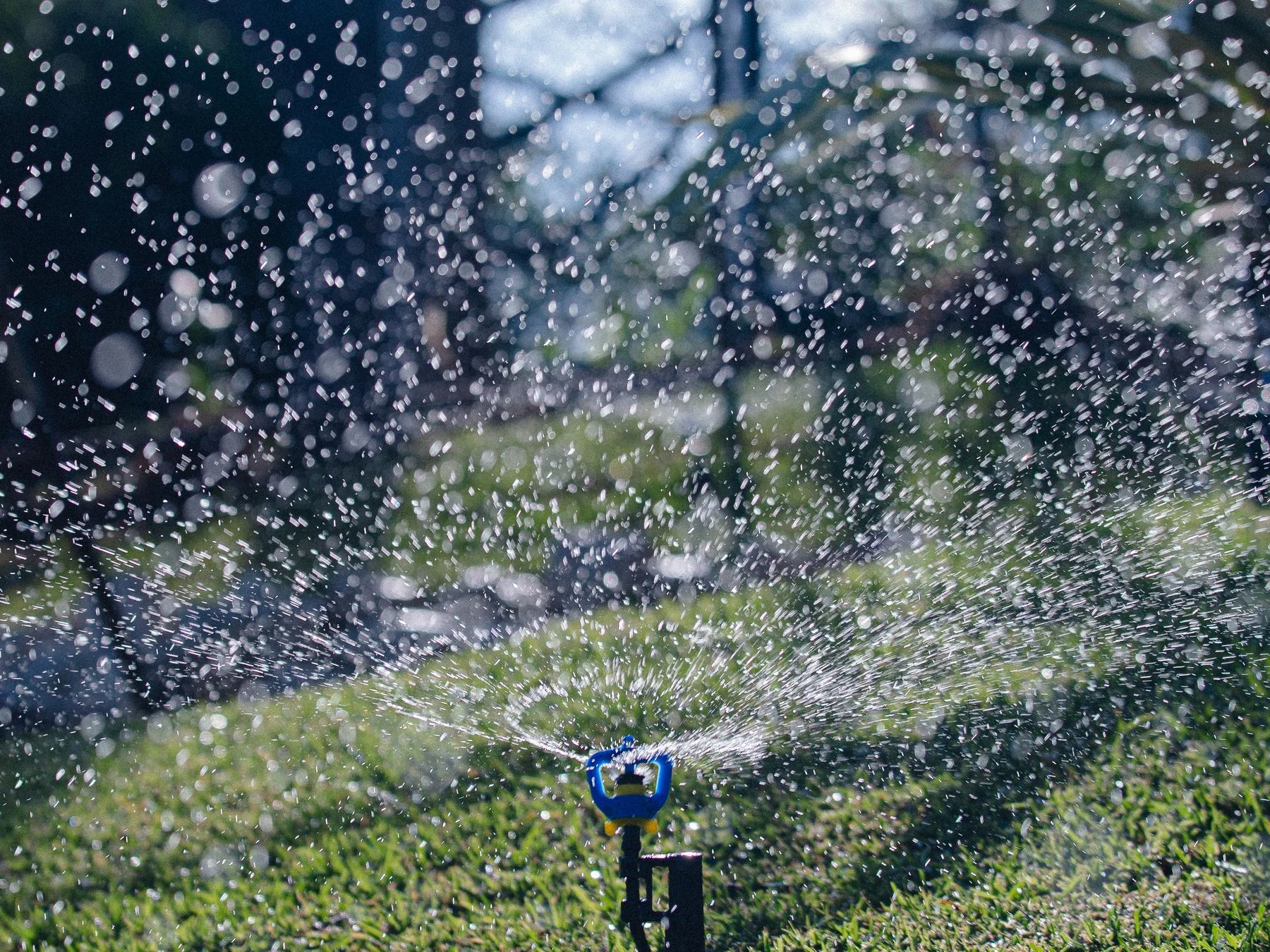
Water deeply every 15 to 20 days in dry spells
When winter turns dry, give your lawn one deep drink about every 15 to 20 days. The City of Fort Worth's winter guidance calls for about an inch of water every 15 to 20 days in winter, "if at all."
- Go deep, not often. One slow, deep soak beats several light sprinkles. Deep water keeps roots growing down.
- Measure it. Set an empty tuna can on the lawn. When it holds about an inch, you're done.
- Let it soak in. Clay soil absorbs water slowly. Split the watering into two or three short runs with a 30 to 60 minute break between them so water soaks in instead of running off.
- Pick a mild day. Water in the late morning after any frost has melted, so the water soaks in well before night.
Skip watering when it rains
If DFW is getting regular winter rain, skip watering entirely. Rain usually gives a dormant lawn everything it needs.
- Check before you water. Push a long screwdriver into the lawn. If it slides in easily, the soil has enough moisture. If you have to fight it, the soil is dry.
- Use free local advice. AgriLife points homeowners to Water My Yard and the Texas ET Network for weekly watering advice based on local weather.
- Add a rain and freeze sensor. It stops your system from running in the rain or the cold. Fort Worth requires them on systems installed since June 2007.
Hand water during warm, dry December and January spells
North Texas winters swing hard. A week of sunny, 70-degree days in December or January with no rain dries out soil fast, especially on slopes and in full sun.
When that happens, water the lawn by hand once, deeply, instead of turning the automatic schedule back on. Then go back to checking the soil every couple of weeks. Fort Worth allows hand-held hose watering at any time, but rules differ by city, so check yours before you water.
The dangers of overwatering a winter lawn
In winter, too much water does more damage than too little. Grass that isn't growing can't use extra water, so it just sits in cold clay. Cool, wet soil is exactly what lawn fungus wants.
Fungal diseases that love wet winter soil
- Brown patch. Also called large patch on warm-season grass. It shows up as circles of yellow or brown turf, mostly in St. Augustine and Zoysia, during cool, wet weather. AgriLife notes that overwatering in fall and spring makes it more likely.
- Root rot. Take-all root rot attacks the roots of St. Augustine and Bermuda. It thrives in cool, moist conditions, then shows up as yellow, thinning patches when spring warms up. By then, the damage is done.
Soggy clay also squeezes out the air roots need, which weakens the lawn heading into spring.
Signs you're overwatering
- Soil that still squishes underfoot days after watering
- Water running onto the sidewalk, driveway, or street
- Mushrooms or moss popping up in thin spots
- Yellow or brown circles that spread as spring arrives
If you see these, turn off the automatic schedule and let the soil dry out before you water again.
Freeze warnings: shut your system off before 40°F
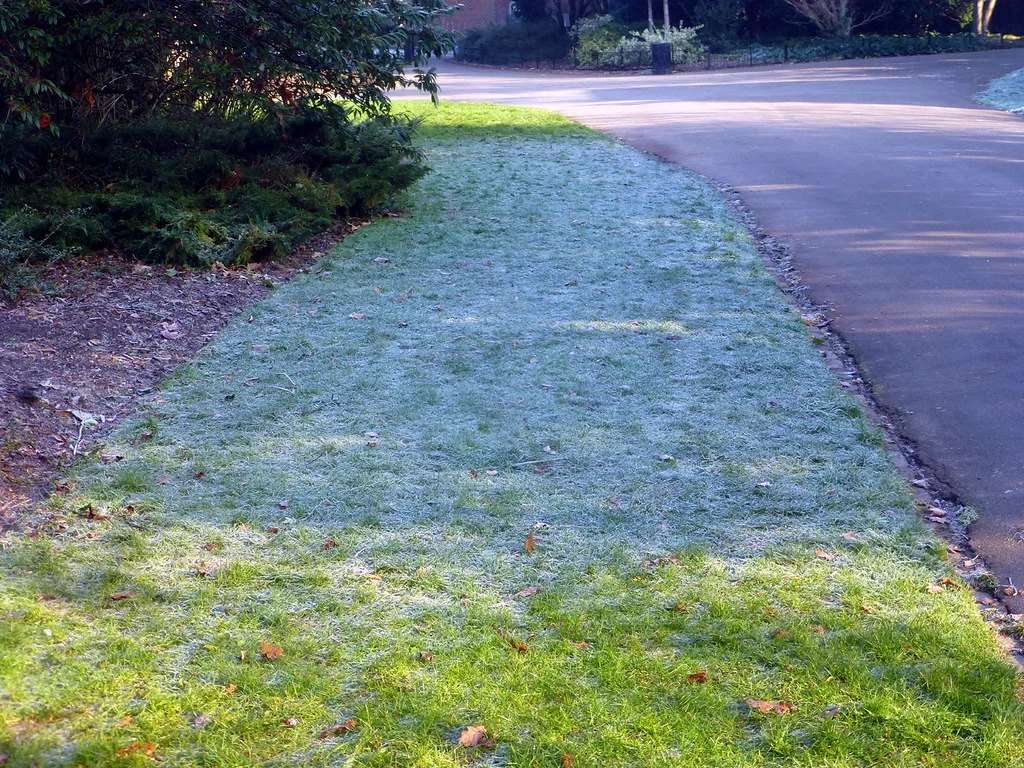
DFW can go from shorts weather to a hard freeze in a day. Our rule is simple: when the forecast calls for temperatures below 40°F, shut your irrigation system off before the cold front arrives.
What goes wrong when sprinklers meet a freeze
- Busted pipes. Water left in the lines and backflow device can freeze, expand, and crack them.
- Broken sprinkler heads. Ice inside heads and nozzles can split them, which means repairs and wasted water in spring.
- Dangerous icy sidewalks. Spray that hits pavement turns to ice fast. The City of Fort Worth names irrigation systems as a common cause of icy roads and sidewalks during freezes.
How to winterize your sprinkler system
The City of Fort Worth recommends these steps for homeowners:
- Turn off the irrigation controller.
- Shut off the water at the backflow device.
- Run the zone closest to the backflow to release pressure from the main line.
- Check the battery in your controller and in any rain or freeze sensor.
- Aim sprinkler heads at the lawn, not the driveway, street, or sidewalk.
Need to water mid-winter? Hand water, or run the system manually on a mild day, then shut it back down. For bigger repairs or adding a freeze sensor, call a licensed irrigator.
Before a hard freeze
If your soil has been dry for weeks, water by hand on a mild afternoon a day or two before the front arrives. Moist soil holds heat better than dry soil, which helps protect roots and crowns. Never water when it's at or below freezing.
Your DFW winter watering checklist
- Turn off automatic watering once temperatures stay below 70°F.
- Plan on 50% to 75% less water than in summer.
- Water deeply about every 15 to 20 days, only during dry spells.
- Skip watering when winter rain is steady.
- Hand water during warm, dry stretches in December and January.
- Shut your system down before temperatures drop below 40°F.
- Watch for soggy soil, runoff, and spreading brown circles.
For winter weeds, fertilizer timing, and fallen leaves, read our DFW winter lawn care guide.
Set your lawn up for a big spring comeback
Smart winter watering keeps your lawn alive. What happens next decides how green it gets. The weeks from late February on, when soil warms and grass wakes up, set the tone for the whole season.
That's where Flamingo Pros comes in. We're a locally owned DFW team that knows North Texas clay, heat, and watering rules firsthand. With the Green & Pink Plan, you get:
- Eight seasonal fertilization and weed control visits, timed to North Texas soil temperatures. See our seasonal lawn treatment.
- Real soil data. We test your soil before your first service, so every treatment matches what your lawn actually needs.
- A lawn-health report after every visit. If we spot dry patches, soggy spots, or runoff, we flag it so you can adjust your watering.
- Free core aeration when you sign up for the Green & Pink Plan by February 28, 2027.
Stay warm this winter and let us get your yard ready for a massive, green comeback in the spring. Visit flamingopros.com to see the plan and lock in your spot.
Sources
- Texas A&M AgriLife Extension, Warm-season turfgrass fall and winter prep
- Texas A&M AgriLife Extension, Bermudagrass Home Lawn Management Calendar
- Texas A&M AgriLife Extension, St. Augustinegrass Lawn Management
- Texas A&M AgriLife Extension, Water Efficient Lawn Care for North Texas
- City of Fort Worth, Prepare pipes for freezing temperatures
- City of Fort Worth, Year-round outdoor watering requirements
Photo credits
- Cover: AI-generated image created for Flamingo Pros.
- Sprinkler on a lawn: Jonathan Córdova R., Pexels, Pexels license (free to use). Cropped.
- Frosted lawn: Flickr, CC0.
Skip the guesswork every season.
Year-round care
The Pink Plan
Eight seasonal visits a year
Included in plan
- Seasonal fertilization & weed control
- Inspection at every visit
- Treatments timed to your lawn’s needs
- Soil tests at your first and last treatment
- An online Lawn Profile with your soil results
Aeration benefits
- Relieves the compacted clay soil common in North Texas
- Helps air and water reach roots
- Helps treatments absorb into the soil for more consistent, visible results
- Helps your grass stand up straighter
Your price
$129/ month
12 monthly payments, $1,548 a year.
- Lot size
- Up to 15,000 sq ft
- Billing
- Monthly
- + Soil Testing
Regular price $158FREE - + Lawn Core Aeration
Regular price $299FREE
One core aeration a year is part of the plan.

Service
Seasonal lawn treatment
Seasonal fertilization and weed control, timed to your lawn's needs, with an inspection at every visit.
Learn more about seasonal lawn treatmentIdeal window
$129/mo
The Pink Plan, for lots up to 15,000 sq ft
Service
Lawn Profile
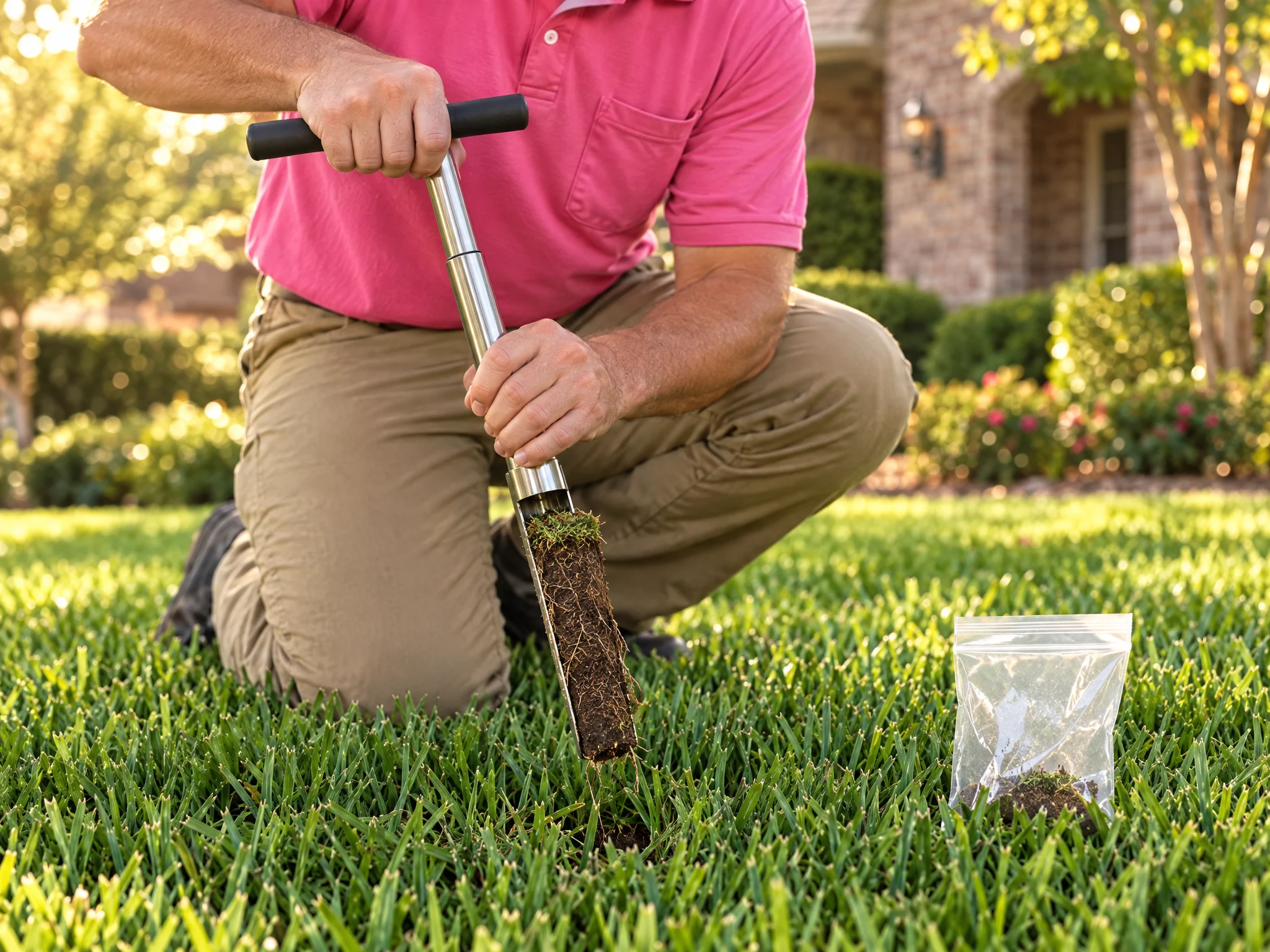
Soil samples pulled from across your lawn and tested by a lab, with results in your online Lawn Profile.
Learn more about lawn profileIdeal window
Size tier
Up to 5,000 sq ft
$79/ test
Keep reading

Lawn care built for Dallas-Fort Worth, not anywhere else
Dallas lawn care made for North Texas clay, heat, and watering rules. See how Flamingo Pros builds a custom plan for your grass, soil, and shade.
10 min read · October 22, 2026

Guesswork vs. Data: Why Soil Testing is the Secret to a Lush DFW Lawn
Why DFW's alkaline clay makes guessing expensive, the real benefits of soil testing for Texas lawns, and how Flamingo Pros tests your soil when service starts and periodically each year to track soil health.
8 min read · October 20, 2026

Beyond the Green: The DFW Homeowner's Guide to Lawn Colorants
Dye vs. paint vs. pigment explained, a four-season colorant plan for Bermuda, St. Augustine and Zoysia, and why golf courses use colorant instead of water-hungry winter overseeding.
8 min read · October 20, 2026