
How to care for a sleeping DFW lawn this winter
A Texas lawn pro's winter guide for Bermuda, St. Augustine and Zoysia in DFW. Dormancy, winter weeds, pre-emergent timing, freeze-ready watering and leaf cleanup.
The Flamingo Pros lawn team
7 min read · October 19, 2026
On this page
Every winter we get the same call. "My lawn turned brown overnight. Is it dead?" Almost always, no. Bermuda, St. Augustine and Zoysia are warm-season grasses. When DFW nights turn cold, they go dormant and wait for spring.
Dormant grass still needs the right care. Do too much and you feed weeds or invite disease. Do nothing at the wrong moment and a hard freeze hits harder than it should. Here is how our team handles a sleeping DFW lawn, month by month.
Why your lawn goes brown in winter

Warm-season grass grows best in heat. Once frost starts settling on DFW yards in late fall, the blades stop growing and fade to tan. That color change is a survival move, not a death sentence.
What the roots are doing
Below the surface, the plant is still alive and working slowly.
- Crowns sit at the soil line and hold the growing points for spring.
- Stolons and rhizomes are the runners above and below ground. They store the energy your lawn uses to green up.
- Roots keep taking up a little water and stay anchored in the soil.
Bermuda has both stolons and rhizomes, so it bounces back well. St. Augustine has only above-ground stolons, which is why it is the most likely of the three to take freeze damage. Zoysia is the toughest in the cold.
Why winter fertilizer backfires
A dormant lawn cannot use nitrogen. So where does it go?
- Weeds use it. Henbit, chickweed and Poa annua are actively growing in winter. Nitrogen gives them a free meal.
- It invites freeze damage. Any tender new growth you push is the first thing a hard freeze kills.
- It raises disease risk. Extra nitrogen in cool, wet weather helps large patch, a common fungus in St. Augustine.
Wait until your lawn is green and actively growing in spring. Texas A&M AgriLife suggests making the first feeding after you have mowed the new growth at least twice. That also means skipping "weed and feed" products in February, since they add nitrogen while the grass is still asleep.
Winter weed control for dormant warm-season grass
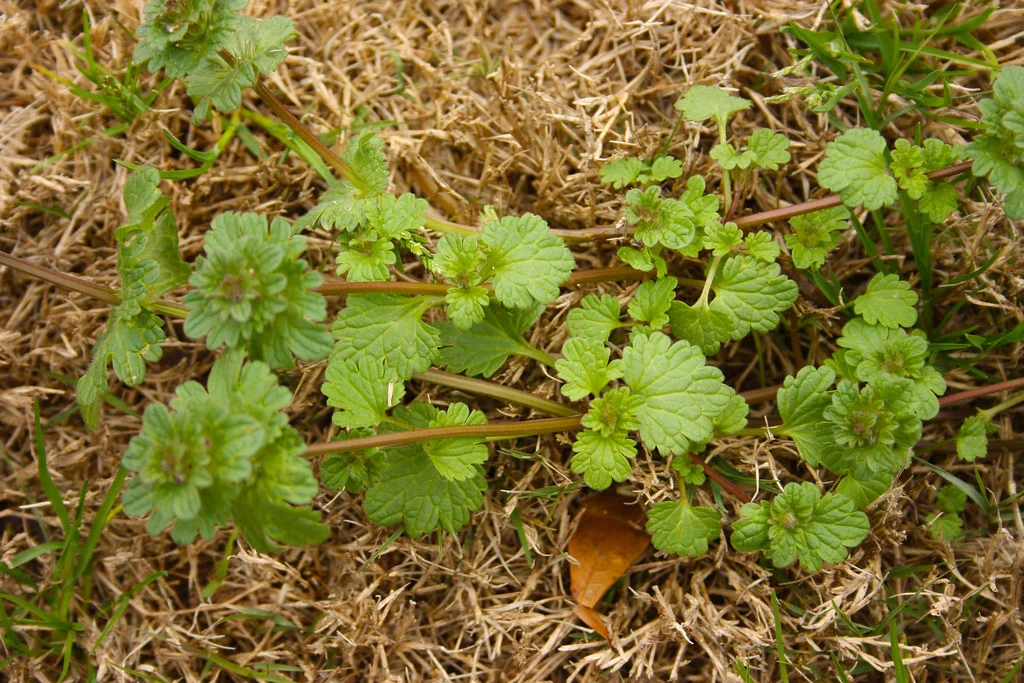
A dormant lawn makes weeds easy to spot. Anything bright green in January is almost certainly a weed. The three we see most across DFW:
Know your winter weeds
- Henbit. Square stems, scalloped round leaves stacked up the stem, and small purple flowers by late winter.
- Chickweed. Low, tangled mats of small oval leaves with tiny white star-shaped flowers. It loves shady, damp spots.
- Poa annua (annual bluegrass). Light green tufts that stand out against tan grass, with white seed heads in late winter. It is a grass, not a broadleaf weed.
Spot-treat, don't blanket spray
Treat only the weeds, not the whole yard.
- Use a broadleaf herbicide for henbit and chickweed. A three-way product (2,4-D, MCPP and dicamba) works well on most lawns.
- Spray on a calm day when the air is above 50°F, so the weed is growing enough to take it in.
- Hit weeds while they are small and before they flower. A plant that has already set seed has done its damage for next year.
- St. Augustine is sensitive to some herbicides, including 2,4-D. Check that the label lists St. Augustine before you spray.
- Broadleaf products do nothing to Poa annua. Pull small clumps by hand, and plan to prevent it next fall.
- If you can't spray yet, mow the weeds down before they flower. It keeps seed out of your soil.
Get pre-emergent timing right
Pre-emergent stops weed seeds from sprouting. It does nothing to weeds you can already see, so timing is everything.
- Late winter application. In DFW, this usually lands between late February and mid-March. Go by soil temperature, not the calendar. Apply when soil two inches down holds near 55°F for four to five days in a row. That blocks crabgrass and other summer weeds. At Flamingo Pros, we use local soil data and temperature tracking so our clients never have to guess when it's time to apply.
- Fall application. Once soil cools to about 70°F, a second round blocks next winter's henbit and Poa annua. This is the real fix for a weedy winter lawn.
- Water it in as the label directs. Pre-emergent needs moisture to activate.
- Choose a product without nitrogen for the late winter round, for the reasons above.
Dormant watering: less, but not zero
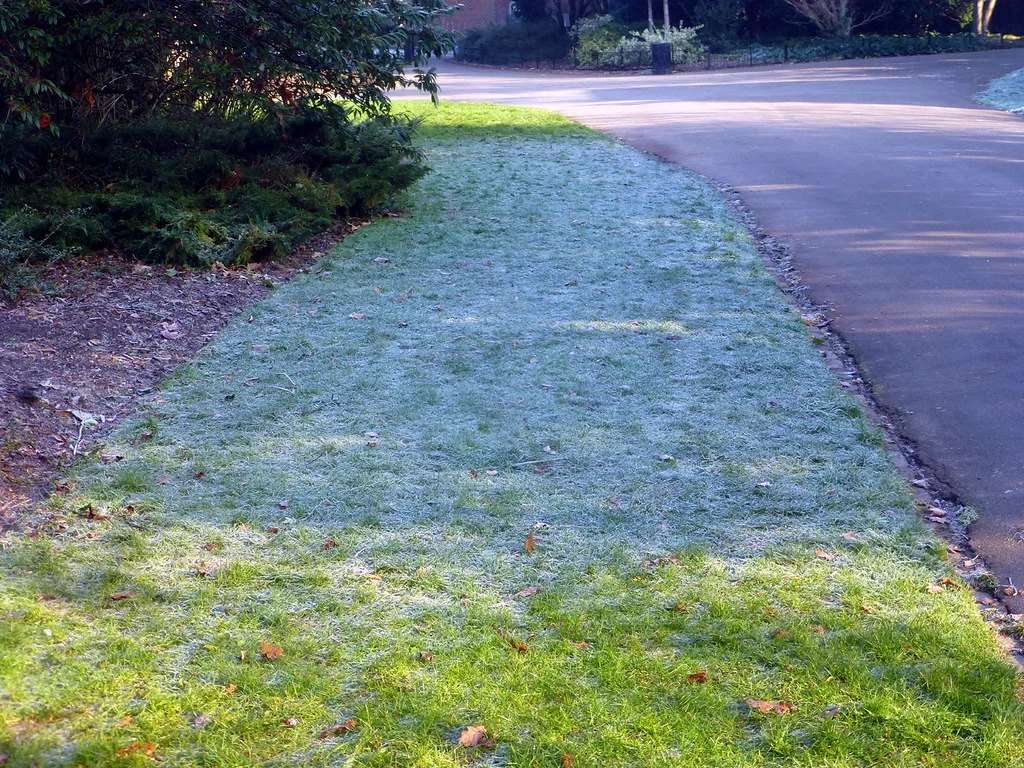
Most of the winter, your sprinklers should be off. Dormant grass uses very little water, and soggy soil in cool weather feeds root disease. AgriLife recommends turning irrigation off while the lawn is not actively growing.
The exception is a dry winter. DFW can go weeks without meaningful rain, and bone-dry soil is a problem when a hard freeze arrives.
When to water a dormant lawn
- Every 15 to 20 days in a dry spell. If there has been no real rain in that time and the soil is dry, give the lawn one slow, deep soak of about an inch. That matches the City of Fort Worth's winter guidance. For the full how-to, read should I water my DFW lawn in winter?
- Before a hard freeze. Moist soil holds heat better than dry soil, which helps protect crowns and roots. Water a day or two ahead of the cold front.
- On a mild afternoon. Water midday when temperatures are above freezing, so it soaks in before night.
- Never when it's freezing. Water on frozen turf or sidewalks turns to ice fast.
Check the soil before you water. Push a long screwdriver into the lawn. If it slides in easily, skip it. If you have to fight it, the soil is dry. Many DFW cities limit watering days, so check your city's current rules first.
Leaf management: oaks and pecans

DFW is full of big oaks and pecans, and they don't drop leaves on a neat schedule. Red oaks and pecans let go in late fall. Live oaks shed in late winter into spring. Leaf duty here can run from November to April.
Why leaf piles hurt dormant grass
A thick mat of leaves blocks light and holds moisture against the turf. Damp, shaded grass in cool weather is exactly what large patch and take-all root rot want. St. Augustine takes it the worst.
Mulch or remove?
- Mulch thin layers. If you can still see grass through the leaves, mow over them. Small shredded pieces break down and return nutrients to the soil.
- Remove heavy layers. If leaves cover the grass completely, rake or bag them. Mulching a thick mat just makes a thinner mat.
- Don't let them sit after rain. Wet leaves pack down fast. Clear them before they form a soggy layer.
- Watch shady corners and fence lines. Leaves pile up there and stay damp longest.
DFW winter scenarios we see every year
A sudden late-December freeze
It's 70°F on Christmas week, then the forecast calls for a hard freeze in two days. Here's the plan.
- Check the soil. If it's been dry for weeks, water deeply the next mild afternoon.
- Don't fertilize, and don't try to "toughen up" the lawn with anything.
- Protect exposed sprinkler pipes and your backflow device with insulation or a cover.
- Stay off frosted grass. Walking on frozen blades breaks them and leaves brown footprints.
- Afterward, be patient. You won't know the real result until spring green-up.
Dead or dormant?
After a hard freeze, many St. Augustine owners worry. You can check without waiting for spring.
- Tug test. Grab a handful and pull. Dormant grass stays anchored. Dead grass lifts out easily, often with rotten roots.
- Look at the runners. Scrape back the blades and pinch a stolon near the soil. Firm and pale green or white inside means alive. Brown and mushy or brittle means dead.
- Watch spring timing. Dormant grass greens up from the crowns as soil warms. Patches that stay brown weeks after the rest of the lawn has greened likely need repair.
Green clumps in a tan January lawn
Your Bermuda is tan, but bright green clumps are popping up near the beds. Those are winter weeds, not "early grass."
- Identify them first. Purple flowers point to henbit. Tiny white flowers point to chickweed. Light green grassy tufts point to Poa annua.
- Spot-treat the broadleaf weeds on the next day above 50°F.
- Pull Poa annua by hand, and note the spot for next fall's pre-emergent.
A pecan tree that won't quit
It's mid-January and the pecan out front is still dropping leaves and shucks onto your St. Augustine. Clear it every week or two instead of waiting for a big cleanup. Shaded St. Augustine under a leaf mat is the classic setup for large patch.
Your DFW winter lawn checklist
- Stop fertilizing once the lawn goes dormant.
- Keep sprinklers off, except a deep soak every 15 to 20 days in a dry spell.
- Water ahead of a forecast hard freeze if the soil is dry.
- Spot-treat henbit and chickweed on days above 50°F.
- Mow or pull weeds before they flower.
- Mulch thin leaf layers and remove thick ones.
- Put down pre-emergent when soil holds near 55°F, usually late February to mid-March.
- Feed only after the lawn has greened up and been mowed twice.
Always read and follow the product label. If you'd rather not spend your weekends tracking soil temperatures, mixing herbicides, and dragging hoses before a freeze, let us handle it. Flamingo Pros is a locally owned, DFW-based team. With the Green & Pink Plan, you get year-round, data-driven treatments, including perfectly timed winter weed control, all backed by actual soil testing. Plus, you can manage your 8 seasonal visits and view your lawn's progress right from our easy-to-use customer app. Stay warm inside, and let us protect your lawn this winter.
Sources
Photo credits
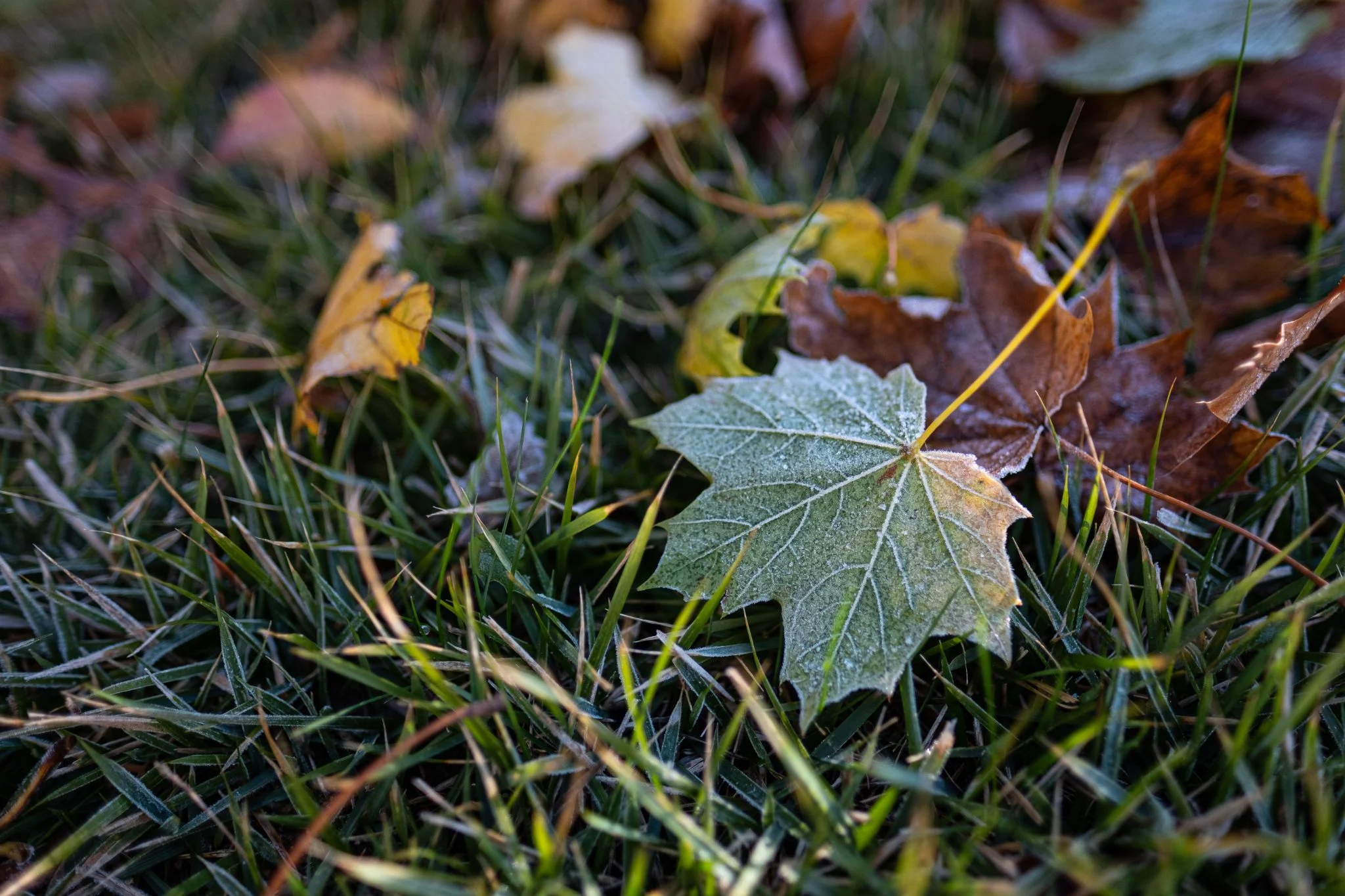
- Cover: frost on a maple leaf in grass. WordPress Photo Directory, CC0.
- Dormant Bermuda grass: Famartin, Wikimedia Commons, CC BY-SA 4.0. Resized.
- Henbit in dormant grass: Flickr, CC0.
- Frosted lawn: Flickr, CC0.
- Leaves on lawn: Mikael Kristenson, Wikimedia Commons, CC0.
Skip the guesswork every season.
Year-round care
The Pink Plan
Eight seasonal visits a year
Included in plan
- Seasonal fertilization & weed control
- Inspection at every visit
- Treatments timed to your lawn’s needs
- Soil tests at your first and last treatment
- An online Lawn Profile with your soil results
Aeration benefits
- Relieves the compacted clay soil common in North Texas
- Helps air and water reach roots
- Helps treatments absorb into the soil for more consistent, visible results
- Helps your grass stand up straighter
Your price
$129/ month
12 monthly payments, $1,548 a year.
- Lot size
- Up to 15,000 sq ft
- Billing
- Monthly
- + Soil Testing
Regular price $158FREE - + Lawn Core Aeration
Regular price $299FREE
One core aeration a year is part of the plan.



Service
Seasonal lawn treatment
Seasonal fertilization and weed control, timed to your lawn's needs, with an inspection at every visit.
Learn more about seasonal lawn treatmentIdeal window
$129/mo
The Pink Plan, for lots up to 15,000 sq ft
Keep reading
Lawn care built for Dallas-Fort Worth, not anywhere else
Dallas lawn care made for North Texas clay, heat, and watering rules. See how Flamingo Pros builds a custom plan for your grass, soil, and shade.
10 min read · October 22, 2026

Should I water my DFW lawn in winter? And if so, how much?
Should you water your DFW lawn in winter? Yes, but 50% to 75% less. How often to water dormant Bermuda, St. Augustine, and Zoysia, plus freeze tips.
7 min read · October 22, 2026

Guesswork vs. Data: Why Soil Testing is the Secret to a Lush DFW Lawn
Why DFW's alkaline clay makes guessing expensive, the real benefits of soil testing for Texas lawns, and how Flamingo Pros tests your soil when service starts and periodically each year to track soil health.
8 min read · October 20, 2026