
Know your weeds: a DFW pro's guide to North Texas lawn weeds
How to identify crabgrass, nutsedge, spurge, henbit, Poa annua and dandelions in North Texas lawns, why they hurt Bermuda, St. Augustine and Zoysia, and when to treat each one.
The Flamingo Pros lawn team
12 min read · October 19, 2026

On this page
In North Texas, weeds never really take a season off. Crabgrass and nutsedge move in with the summer heat. Henbit and Poa annua take over while your grass sleeps through winter. Every one of them is competing with your Bermuda, St. Augustine or Zoysia for the same water and food.
This guide covers the six weeds DFW homeowners ask about most. You'll learn how to spot each one, why it matters, and what actually gets rid of it.
The hidden cost of weeds
A few weeds can look harmless. The trouble is what they take from the grass around them, especially in a DFW summer.
They steal water when your lawn can least spare it
- DFW summers bring long stretches of triple-digit heat, little rain and city watering limits. Every weed in your yard drinks from the same soil moisture as your turf.
- Crabgrass and spurge thrive in heat and dry soil. They keep growing while drought-stressed turf slows down.
- Water you put down for your lawn ends up feeding the weeds, and your grass gets less of every soak.
They eat the fertilizer you paid for
- Fertilizer doesn't pick favorites. Whatever is growing in the lawn takes up the nitrogen.
- Fast-growing summer weeds grab nutrients quickly, so a weedy lawn needs more product to get the same green.
They crowd shallow roots in heavy clay
- Much of DFW sits on dense clay that packs tight. Turf roots in compacted clay tend to stay shallow.
- Nutsedge tubers and dandelion taproots hold ground deeper in the soil. Crabgrass and spurge spread across the surface and shade out thin turf.
- Each weed that claims a thin spot makes it harder for Bermuda, St. Augustine or Zoysia runners to fill back in.
They cost you curb appeal
- A patchy, weedy lawn is the first thing neighbors, guests and buyers notice from the street.
- Weeds are easiest to spot when they don't match. Light green crabgrass clumps in July and bright green Poa annua in a tan January lawn stand out from a block away.
The summer invaders
These three show up as DFW heats up and peak from June through August.
Crabgrass

Crabgrass is a summer annual. It sprouts from seed each spring, drops seed all summer and dies at the first hard frost, leaving a bare spot behind.
How to identify it:
- Wide, flat, light green blades that look coarser than Bermuda.
- Low growth that spreads out from a center point like a star or a crab's legs.
- Stems that root where they touch the soil.
- Thin, finger-like seed heads in mid to late summer.
- It shows up first along hot driveway and sidewalk edges and in thin spots.
The 55-degree soil rule:
- Crabgrass seed sprouts once soil a couple of inches down holds near 55°F for several days.
- In DFW, that usually happens from late February to early March. In a cool spring it can slide into late March.
- Your spring pre-emergent has to be down and watered in before that happens.
- Pre-emergent only stops seeds. It does nothing to crabgrass that is already up.
If crabgrass is already up:
- Pull young plants when the soil is moist. Crabgrass has fibrous roots, so pulling works, unlike nutsedge.
- Spot-treat larger plants with a post-emergent labeled for crabgrass. Quinclorac products are a common choice on Bermuda and Zoysia.
- Many crabgrass killers can injure St. Augustine. Make sure St. Augustine is on the label before you spray.
- Treat while plants are small. Mature crabgrass is much harder to kill.
Nutsedge (nutgrass)
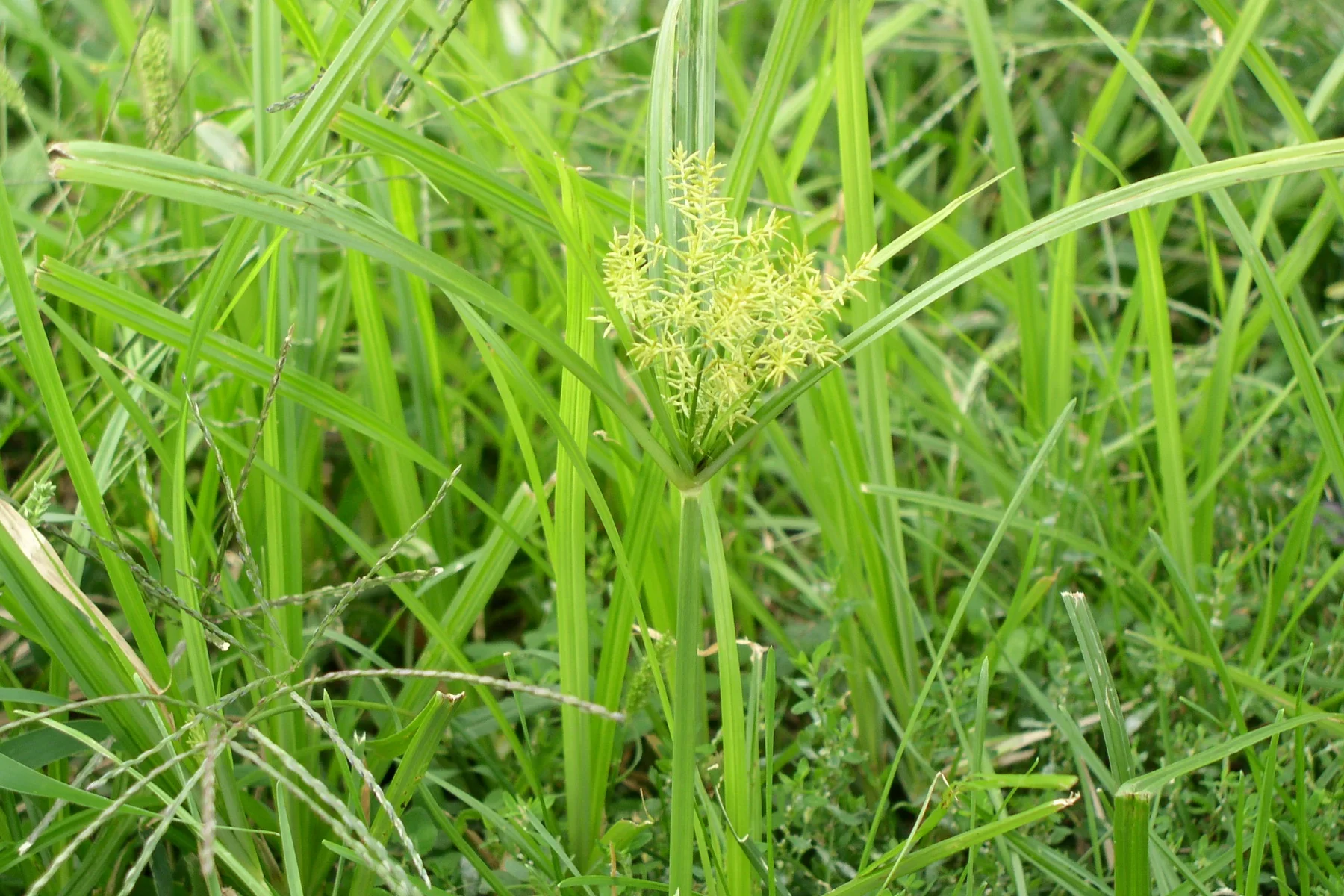
Nutsedge looks like grass, but it isn't. It's a sedge, and it spreads underground through small tubers called nutlets.
How to identify it:
- Roll the stem between your fingers. It feels triangular, with three distinct edges. Grass stems are round.
- Shiny, waxy, yellow-green leaves with a V-shaped groove, arranged in sets of three.
- It grows faster than your turf and stands above the rest of the lawn a day or two after you mow.
- It loves wet spots: low areas, poorly drained clay and the zone around a leaky sprinkler head.
- Yellow nutsedge has leaves that taper to a fine point. Purple nutsedge has blunt tips and chains of dark tubers underground.
The golden rule: never pull it.
- When you pull nutsedge, the stem usually snaps above the tuber. The tuber stays in the soil and sends up a new shoot.
- With purple nutsedge, Texas A&M AgriLife notes that pulling mature plants can wake up dormant tubers and make the problem worse.
- Hand removal only works if you dig out every tuber and rhizome. In DFW clay, that's close to impossible.
How to get rid of it:
- Fix the water first. Nutsedge that keeps coming back usually means soil that stays too wet. Check for overwatering, broken heads and low spots.
- Use a sedge-specific herbicide. Halosulfuron (sold as Sedgehammer and Manage) is safe on most warm-season lawns, including St. Augustine.
- Be patient. Halosulfuron can take up to two weeks to show results, and most lawns need a repeat application.
- Sulfentrazone products work faster, usually within about 48 hours, and suppress sedges for a few weeks.
- Regular broadleaf weed killers and crabgrass products won't touch nutsedge.
- Treat young plants in late spring and early summer. The earlier you start, the fewer new tubers you'll fight next year.
Spotted spurge
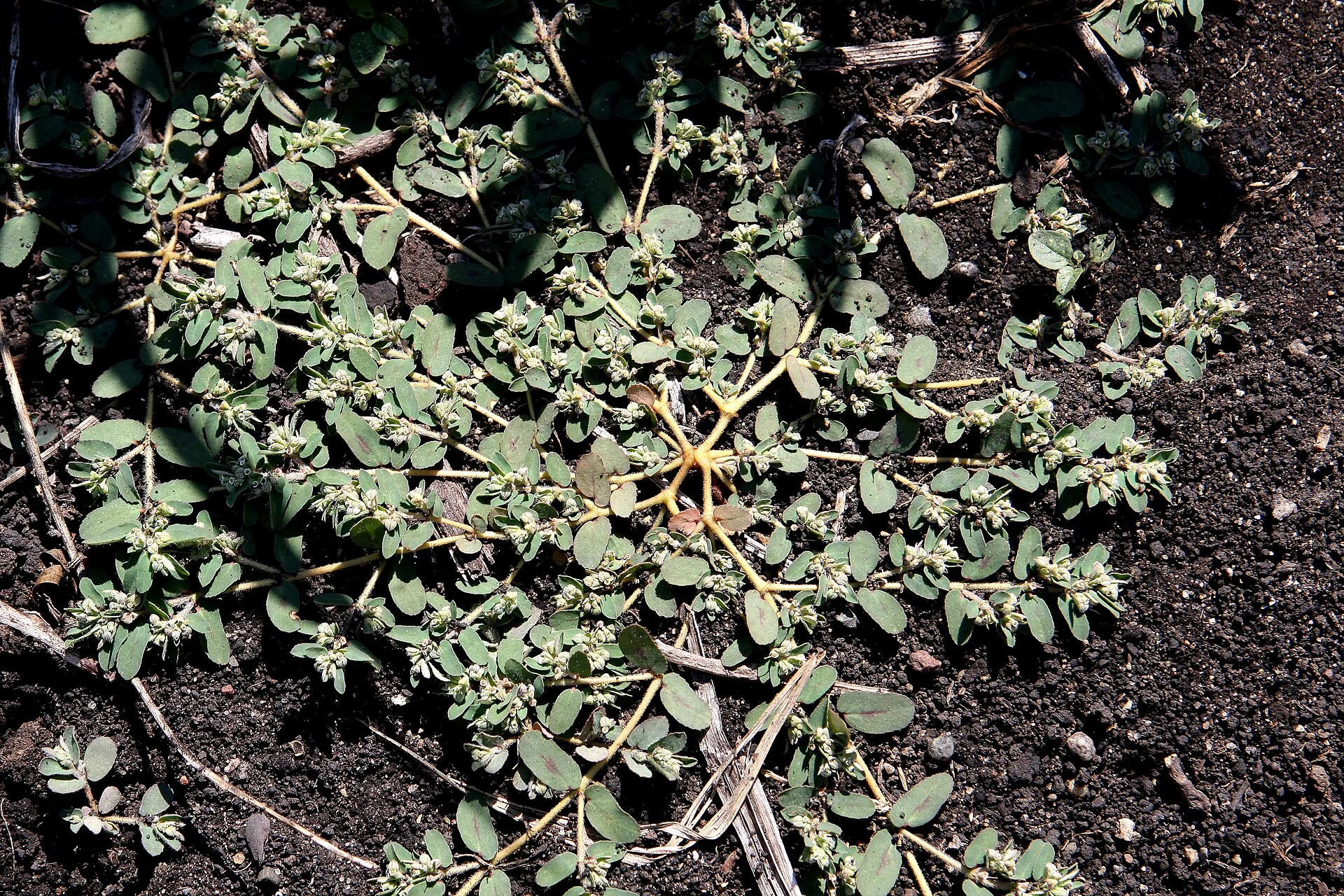
Spotted spurge is a summer annual that loves heat, dry compacted soil and thin turf. By August, when drought-stressed lawns start to thin, it moves into every gap.
How to identify it:
- It lies completely flat and forms a round mat from one center point, with stems spreading out like wheel spokes.
- Small oval leaves in pairs, often with a reddish-purple spot in the middle.
- Reddish stems.
- Break a stem and you'll see milky white sap. The sap can irritate skin, so wear gloves.
- Look for it in bare or thin dirt, sidewalk cracks, bed edges and spots that got scalped by the mower.
How to get rid of it:
- Pull it. Spurge grows from a single taproot and lifts out easily from moist soil. Grab the center and get the root.
- Get it before it seeds. Spurge sets seed fast, often within weeks of sprouting.
- Spot-treat larger mats with a broadleaf herbicide labeled for spurge. Check the label if you have St. Augustine.
- Spurge keeps sprouting through the summer. Texas A&M notes that weeds like this may need a second pre-emergent application in June or July.
- The real fix is turf thick enough to leave no bare dirt.
The winter and perennial intruders
Winter weeds sprout in fall, grow while your lawn is dormant and stand out against tan grass. Perennials like dandelion come back from the same root year after year.
Henbit
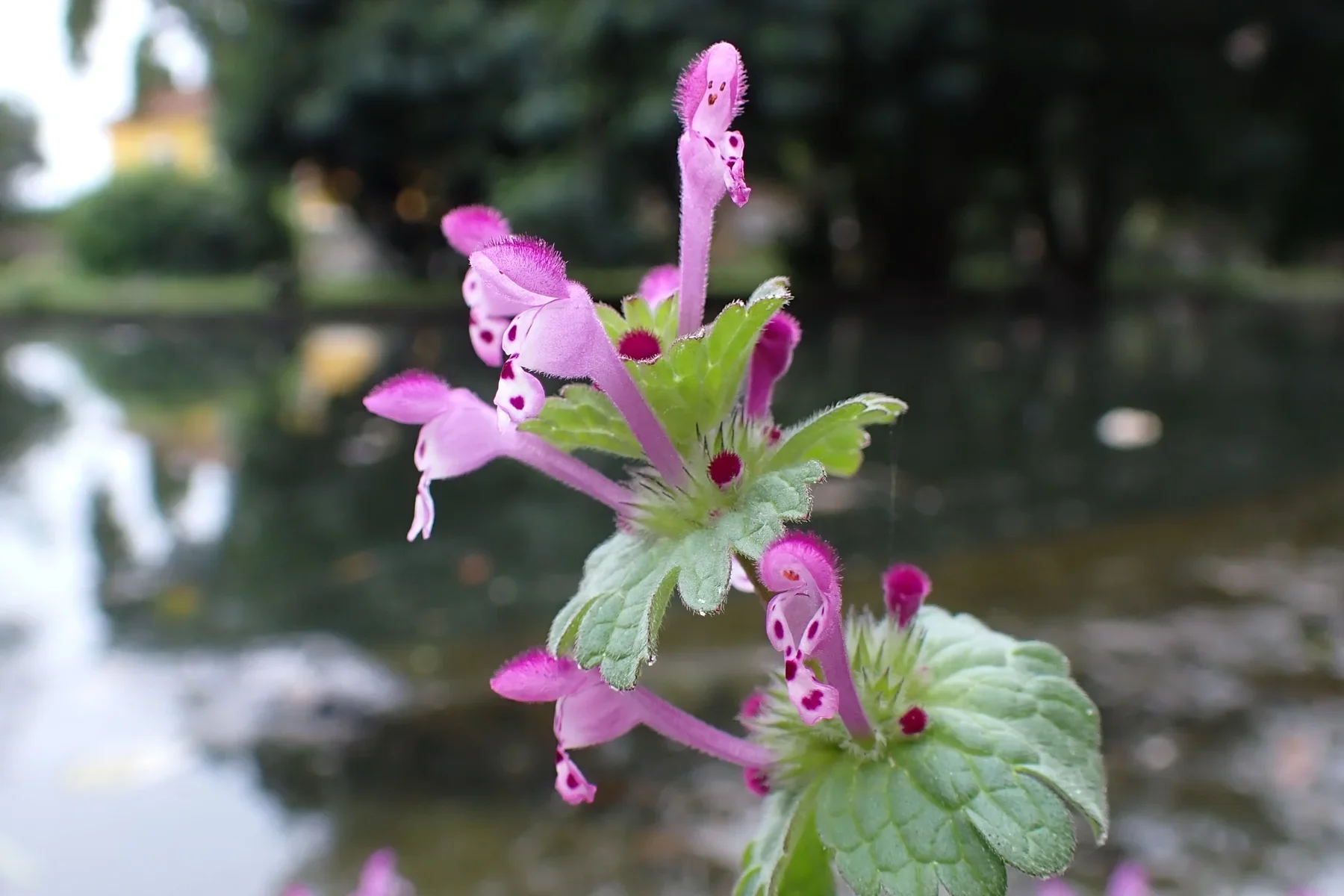
Henbit is a winter annual in the mint family. It sprouts in fall, grows all winter, flowers in late winter and dies when the heat arrives, after dropping its seed.
How to identify it:
- Square stems. Roll one between your fingers and you'll feel four sides.
- Rounded, scalloped leaves in pairs climbing the stem. The top leaves wrap around it.
- Small, tube-shaped purple flowers from late winter into early spring.
- It shows up as green patches across a dormant lawn, often thickest in February and March.
How to get rid of it:
- Prevent it with a fall pre-emergent. That's the long-term fix.
- Spot-treat with a broadleaf herbicide on a calm day above 50°F, while the plants are small and before they flower.
- Check that St. Augustine is on the label before you spray. Some broadleaf products, including those with 2,4-D, can injure it.
- If you can't spray yet, mow it down before it flowers to keep seed out of your soil.
Poa annua (annual bluegrass)

Poa annua is a cool-season grass weed. It's the reason a perfectly dormant Bermuda lawn ends up dotted with bright green clumps all winter.
How to identify it:
- Bright, light green tufts that stand out sharply against tan, dormant turf.
- Soft leaves with boat-shaped tips.
- White to greenish-white seed heads, even when it's mowed short.
- It grows in clumps instead of spreading by runners.
- It's a grass, so broadleaf weed killers do nothing to it.
Why it ruins a winter lawn:
- The clumps break up the clean, even look of a dormant lawn from December through spring.
- Each clump drops seed for next year.
- When the heat comes, Poa annua dies and leaves bare spots right as your lawn is trying to green up.
The September pre-emergent:
- Poa annua sprouts as soil cools in the fall. Texas A&M recommends a fall pre-emergent once soil temperatures drop to about 70°F for several days.
- In DFW, plan on September. Go by soil temperature, and lean early rather than late.
- Water it in as the label directs.
- Miss the window and you're stuck pulling clumps and spot-treating all winter. Post-emergent options for Poa annua in home lawns are limited and depend on your grass type, which is why prevention matters so much.
Dandelion
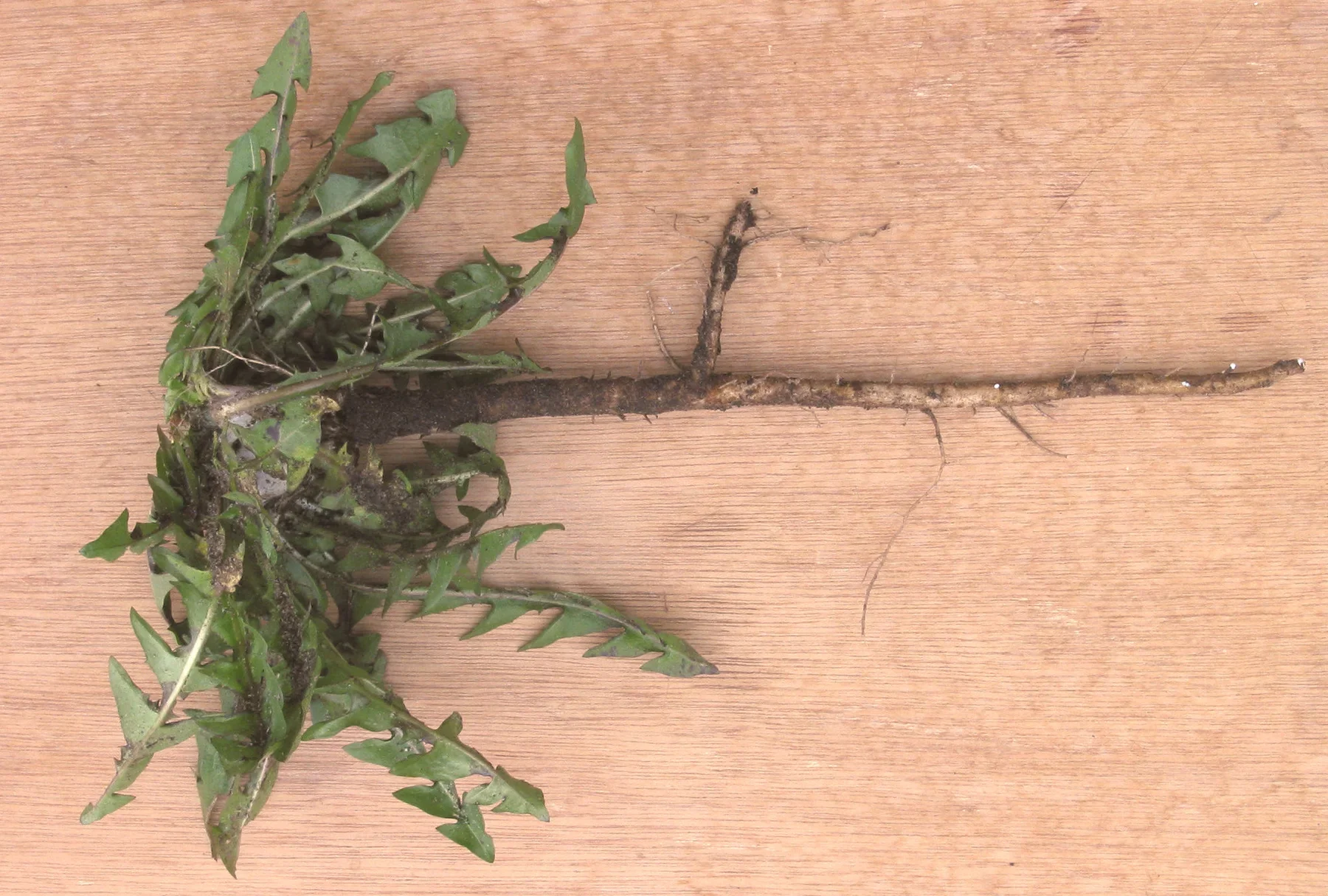
Dandelion is a perennial broadleaf weed. It forms a flat rosette of deeply toothed leaves, sends up yellow flowers on hollow stems and then turns into the familiar white puffball of seeds.
The taproot problem:
- Dandelions grow from a thick taproot that reaches deep into the soil.
- Pull the top and the root usually snaps. The piece left behind can grow a brand new plant.
- That's why surface pulling feels like it works for a week and then fails.
How to get rid of it:
- Dig it, don't pull it. Use a dandelion fork or long weeding tool after a rain, when clay is soft, and lift out the whole root.
- Spot-treat with a broadleaf herbicide. Systemic products move down into the root and kill the whole plant.
- Fall is an especially good time to treat, because the plant is moving energy down into its root.
- Don't let the puffballs mature. Each one scatters seed across your yard and your neighbors'.
The DFW treatment playbook
Most weed problems come down to timing. Here's how the two main tools fit together.
Pre-emergent vs. post-emergent
Pre-emergent herbicides form a barrier in the top layer of soil that stops weed seeds from sprouting.
- They prevent annual weeds: crabgrass, spurge, henbit and Poa annua.
- They do nothing to weeds that are already up.
- They need to be watered in to activate.
- Skip them where you plan to seed, sod or plug soon, since they can stop new grass too.
Post-emergent herbicides kill weeds you can already see.
- They work best on small, actively growing weeds.
- They're the main tool for perennials like nutsedge and dandelion, which come back from roots and tubers instead of seed.
- Spot-treat the weeds, not the whole lawn.
Your DFW weed calendar
| When | What to do | Main targets |
|---|---|---|
| Late February to early March | Apply spring pre-emergent when soil holds near 55°F. Water it in. | Crabgrass, spurge and other summer annuals |
| April to May | Spot-treat dandelions and any henbit that's left. Watch for the first nutsedge. | Dandelion, henbit, nutsedge |
| May to July | Treat nutsedge with a sedge herbicide. Spot-treat young crabgrass. Consider a second pre-emergent round if the label allows. | Nutsedge, crabgrass, spurge |
| August | Pull or spot-treat spurge. Water deeply and fix thin spots. | Spurge |
| September | Apply fall pre-emergent as soil cools toward 70°F. Water it in. | Poa annua, henbit |
| October to November | Spot-treat dandelions and young winter weeds. | Dandelion, henbit |
| December to February | Spot-treat henbit on days above 50°F. Pull Poa annua clumps. | Henbit, Poa annua |
Ground rules for any weed product
- Read the whole label. Check your grass type, the temperature limits and the rate.
- St. Augustine is the most sensitive of the three DFW lawn grasses. Confirm it's listed before you spray anything.
- Many products can injure turf in high heat. Follow the label's temperature limits, especially in July and August.
- A thick, healthy lawn is the best long-term weed control. Weeds need bare dirt and thin turf to get started.
Three DFW scenarios
The nutsedge pull that backfired
In June, a homeowner in a newer DFW subdivision notices a dozen shiny, yellow-green spikes near a sprinkler head. Every Saturday, she pulls them. By August, the patch is about three times the size.
What happened:
- Each pull snapped the stem and left the tuber in the clay, ready to resprout.
- The leaky sprinkler head kept that corner wet, which is exactly what nutsedge wants.
The fix:
- Repair the sprinkler head and let the soil dry out between waterings.
- Stop pulling. Spot-treat with halosulfuron and plan on a second application.
- Start earlier next year, while the plants are young.
Missing the late-February window
February was warm, life was busy and the pre-emergent bag sat in the garage until mid-April. By July, crabgrass is spreading along the driveway and filling the thin spots by the curb.
What happened:
- Soil hit 55°F weeks before the pre-emergent went down. The crabgrass seed had already sprouted, so the barrier had nothing to stop.
The fix:
- Pull young plants now and spot-treat larger ones with a product labeled for your grass type.
- Don't let it seed. Every plant that drops seed this summer adds to next year's crop.
- Put a reminder on the calendar for mid-February to start checking soil temperatures.
Bright green in a brown January lawn
It's January. The Bermuda is evenly tan and fully dormant, exactly as it should be. But bright green clumps with white seed heads are dotted across the front yard, and they're impossible to miss from the street.
What happened:
- That's Poa annua. It sprouted last fall because no pre-emergent went down in September.
The fix:
- Pull small clumps by hand. Spot-treat only with a product labeled for Poa annua on your grass type.
- Mow to remove the seed heads and slow the spread.
- Mark September on the calendar for a fall pre-emergent.
Your DFW weed checklist
- Spring pre-emergent when soil holds near 55°F, usually late February to early March.
- Fall pre-emergent as soil cools toward 70°F, usually September.
- Never pull nutsedge. Fix wet spots and use a sedge herbicide.
- Pull crabgrass and spurge while they're young and the soil is moist.
- Dig dandelions out whole or spot-treat them, ideally in fall.
- Spot-treat henbit on days above 50°F, before it flowers.
- Confirm St. Augustine is on the label before you spray anything.
- Keep turf thick so weeds have no bare dirt to start in.
Always read and follow the product label. If you'd rather not track soil temperatures and spray windows, that's the seasonal timing our lawn plan is built around.
Sources
Photo credits
- Cover: dandelions blooming in a lawn. Famartin, Wikimedia Commons, CC BY-SA 4.0. Resized.
- Large crabgrass plant: Rasbak, Wikimedia Commons, CC BY-SA 3.0. Resized.
- Yellow nutsedge in a lawn: Blahedo, Wikimedia Commons, CC BY-SA 2.5. Cropped.
- Spurge mat: Hardyplants, Wikimedia Commons, public domain. Resized.
- Henbit flowers and leaves: Krzysztof Ziarnek, Kenraiz, Wikimedia Commons, CC BY-SA 4.0. Cropped.
- Poa annua plant: Harry Rose, Wikimedia Commons, CC BY 2.0. Resized.
- Dandelion with taproot: Rasbak, Wikimedia Commons, CC BY-SA 3.0. Rotated and resized.
Skip the guesswork every season.
Year-round care
The Pink Plan
Eight seasonal visits a year
Included in plan
- Seasonal fertilization & weed control
- Inspection at every visit
- Treatments timed to your lawn’s needs
- Soil tests at your first and last treatment
- An online Lawn Profile with your soil results
Aeration benefits
- Relieves the compacted clay soil common in North Texas
- Helps air and water reach roots
- Helps treatments absorb into the soil for more consistent, visible results
- Helps your grass stand up straighter
Your price
$129/ month
12 monthly payments, $1,548 a year.
- Lot size
- Up to 15,000 sq ft
- Billing
- Monthly
- + Soil Testing
Regular price $158FREE - + Lawn Core Aeration
Regular price $299FREE
One core aeration a year is part of the plan.



Service
Seasonal lawn treatment
Seasonal fertilization and weed control, timed to your lawn's needs, with an inspection at every visit.
Learn more about seasonal lawn treatmentIdeal window
$129/mo
The Pink Plan, for lots up to 15,000 sq ft
Keep reading
Lawn care built for Dallas-Fort Worth, not anywhere else
Dallas lawn care made for North Texas clay, heat, and watering rules. See how Flamingo Pros builds a custom plan for your grass, soil, and shade.
10 min read · October 22, 2026

Should I water my DFW lawn in winter? And if so, how much?
Should you water your DFW lawn in winter? Yes, but 50% to 75% less. How often to water dormant Bermuda, St. Augustine, and Zoysia, plus freeze tips.
7 min read · October 22, 2026

Guesswork vs. Data: Why Soil Testing is the Secret to a Lush DFW Lawn
Why DFW's alkaline clay makes guessing expensive, the real benefits of soil testing for Texas lawns, and how Flamingo Pros tests your soil when service starts and periodically each year to track soil health.
8 min read · October 20, 2026