
Liquid vs. core aeration: what your DFW lawn really needs
Core aeration pulls plugs. Liquid aeration sprays on. A DFW lawn pro explains what each does, what the research says, when to use each, and how to pair them on North Texas clay.
The Flamingo Pros lawn team
7 min read · October 19, 2026
On this page
Walk through any DFW neighborhood in spring and you'll see two kinds of aeration ads. One offers a machine that pulls plugs out of your lawn. The other offers a spray that "aerates" with no mess at all. Both get called aeration, but they do very different jobs.
Here's how our lawn team thinks about the choice, what university research says, and why the best plan for North Texas clay usually starts with the machine.
A tale of two aerations
Core aeration makes room by removing soil
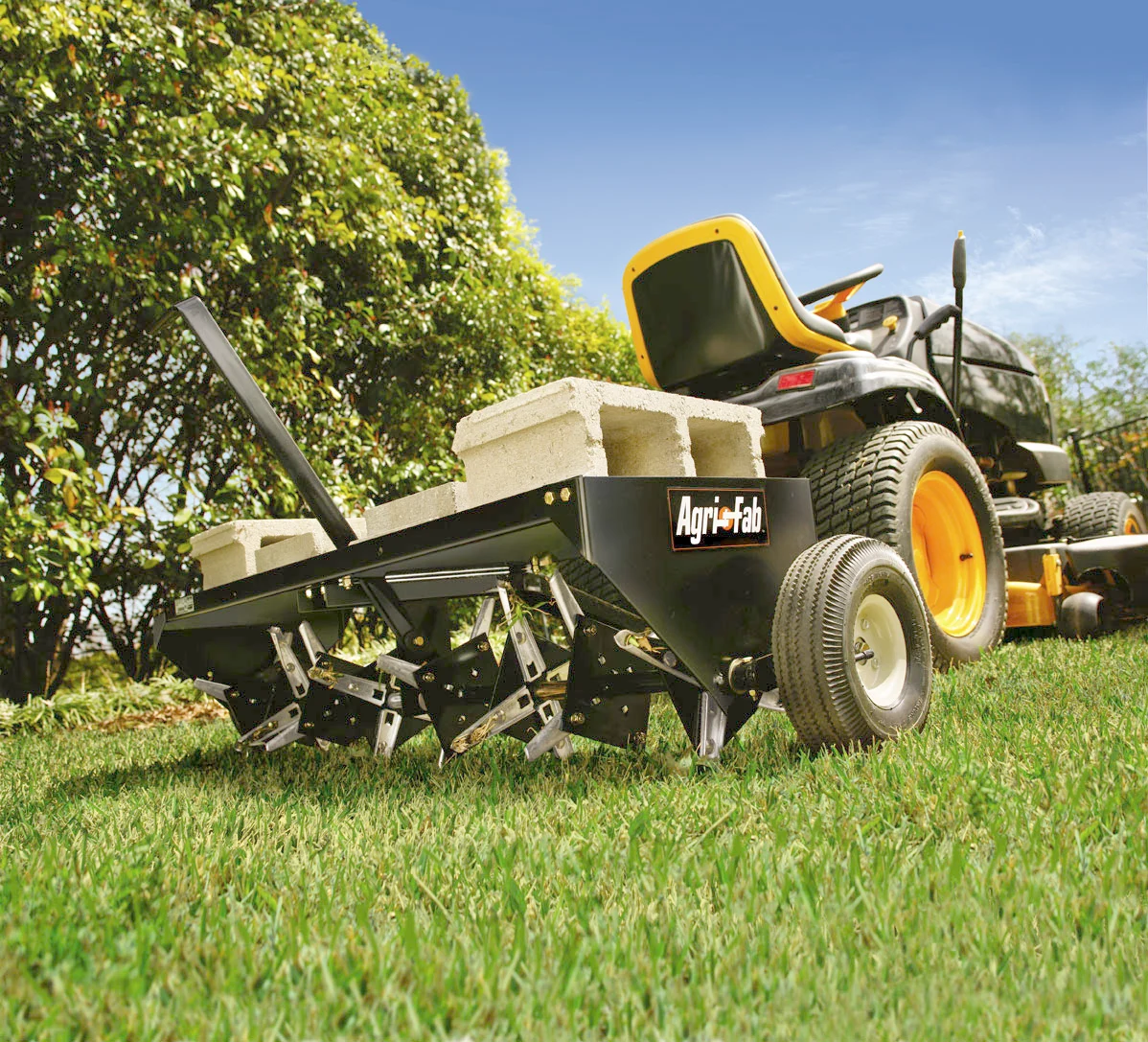
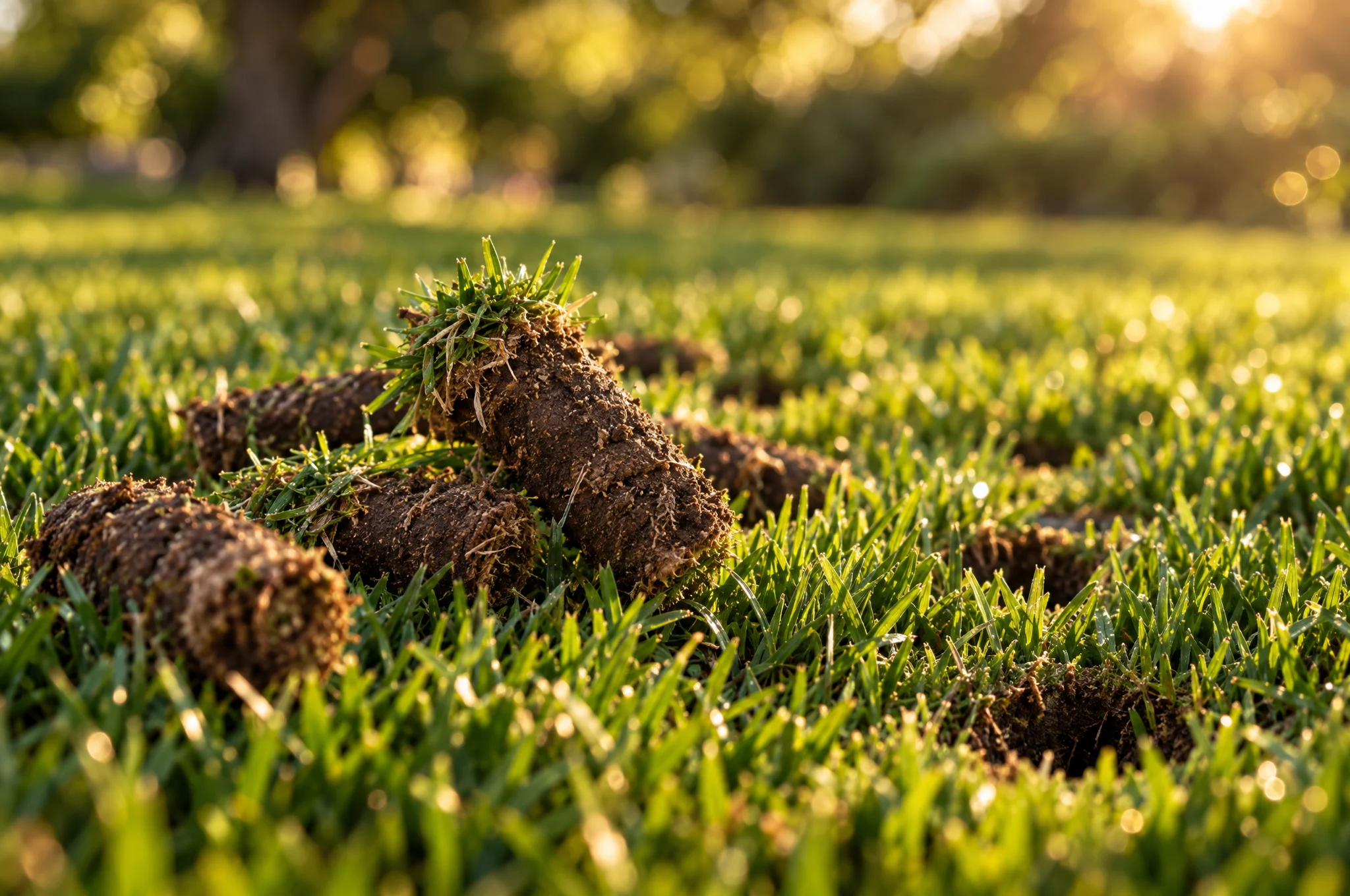
A core aerator rolls hollow tines across the lawn. Each tine pulls out a plug of soil and thatch and drops it on the surface.
- Plugs are about 1/2 to 3/4 inch wide and 2 to 4 inches deep, a few inches apart (University of Maryland Extension).
- Every hole is real, open space. Air, water and fertilizer reach the roots right away.
- The soil around each hole has room to loosen, and new roots grow into the gaps.
One note: spike aerators push soil aside instead of removing it. That can pack the walls of each hole even tighter (Travis County AgriLife). When we say core aeration, we mean hollow tines that pull plugs.
Liquid aeration is a soil conditioner you spray on
Liquid aeration is a solution sprayed across the lawn and watered in. Formulas vary, but common ingredients include:
- Surfactants such as sodium lauryl sulfate, which help water spread and soak in.
- Humates (humic and fulvic acids), which support roots and soil life.
- Kelp or molasses, used as biostimulants.
Product labels say it loosens soil at a microscopic level over several weeks. There are no holes and no plugs.
What the research says
We'd rather be straight with you here. University researchers have not found that liquid aeration relieves compaction.
- A 2025 University of Georgia study on Bermudagrass found liquid aeration helped roots grow and helped soil hold moisture. It did not make the soil softer or help water soak in faster over time. Only repeated core aeration did that. The authors concluded liquid aeration is not a replacement for core aeration.
- University of Minnesota turf scientists found "little to no support in published research" for liquid aeration replacing mechanical aeration.
- Nebraska Extension puts it plainly: "There is no chemical substitute for core aeration."
So we treat liquid aeration as a soil conditioner. It's a helpful extra, not a fix for hard ground.
Pros and cons at a glance
Core aeration
What it does well:
- Creates instant, physical space in the soil.
- Research shows it relieves compaction and helps water soak in.
- Preps the lawn for overseeding or a compost top-dressing.
Where it falls short:
- Plugs sit on the lawn until rain and mowing break them down, often a week or two.
- It only reaches the top few inches of soil.
- Sprinkler heads and shallow lines need to be marked first.
- A machine can't easily reach steep slopes, beds or narrow side yards.
Liquid aeration
What it does well:
- Covers every inch of the yard, including slopes, beds and tight corners.
- No holes, so there's nothing to mark and no risk to shallow irrigation lines.
- No plugs to clean up.
- Research shows it can help rooting and moisture retention.
Where it falls short:
- University studies have not shown it relieves compaction.
- Results are gradual. Product labels often promise 4 to 8 weeks.
- It's weakest where you need help most: dense, compacted clay.
When to choose each method
Choose core aeration when
- The soil is "concrete" hard. A screwdriver won't push in, even after a good watering.
- Water pools on the surface or runs off into the street. University of Minnesota lists both as signs of compaction.
- The lawn gets heavy foot traffic from kids, dogs or a side yard used as a path.
- You live in a new build, where construction equipment graded and packed the soil.
- You plan to overseed or top-dress. The holes give seed and compost direct contact with soil.
Choose liquid aeration when
- Compaction is mild or moderate and the lawn is mostly healthy.
- It's an off year between core aerations and you want to support roots and moisture.
- Shallow irrigation lines or dozens of sprinkler heads make a machine feel risky.
- You're treating flower beds, steep slopes or tight spaces a machine can't reach.
If the soil is truly hard, liquid aeration alone won't fix it. That's a job for the tines.
The DFW "one-two punch"
Much of DFW sits on heavy clay. Locals call it gumbo. It's sticky when wet and hard as brick when dry. On that soil, we pair the two methods in a set order.
- Core aerate first. The machine opens real channels a few inches into the clay.
- Follow with a liquid soil conditioner. Instead of sitting on a crusted surface, the solution drains into the open holes and reaches the root zone.
- Water it in and let the lawn grow. Leave the plugs to break down on their own.
Why this order works: the holes do the loosening, which research supports. The liquid adds what it's shown to do, better rooting and moisture holding, right where new roots are growing. Research hasn't shown the pair loosens soil more than core aeration alone, so think of it as core aeration plus a root-zone boost.
A light compost top-dressing after aeration is another good add-on. It fills the holes with organic matter (Travis County AgriLife).
Timing for Texas warm-season grass
Core aeration: only when the grass is growing
- Bermuda, Zoysia and St. Augustine should be actively growing. In DFW, that usually means late spring into early summer, once the lawn has fully greened up.
- Never aerate dormant grass. A winter-brown lawn can't heal the holes, and weeds can move in.
- Soil should be moist, not soggy. If it's been dry, water a day or two before.
- Texas A&M AgriLife recommends aerating during the growing season when soil moisture is adequate.
Liquid conditioner: alongside core, or on its own
- Apply it right after core aeration, in the same week.
- Use it on its own in spring and early fall while the grass is still growing, as a maintenance boost.
A simple DFW year
- Late spring to early summer: core aerate, then apply a liquid conditioner.
- Summer: water deeply and less often so roots follow the water down.
- Early fall: an optional standalone liquid treatment.
- Winter: no aeration. Let the lawn rest.
For heavy-traffic or clay lawns, plan on core aeration every one to two years (University of Maryland Extension).
Three DFW lawns, three answers
The sprinkler maze
A homeowner in a newer neighborhood has dozens of pop-up sprinkler heads and shallow lines running along the beds. The lawn is healthy, a little thin near the edges, and water soaks in fine.
Our call: a liquid conditioner. There's no need to flag every head, no risk of a tine clipping a line, and the beds get treated too. We'd recheck the soil each year. If it starts to harden, we'd schedule core aeration and mark the heads first.
The new build in Frisco or McKinney
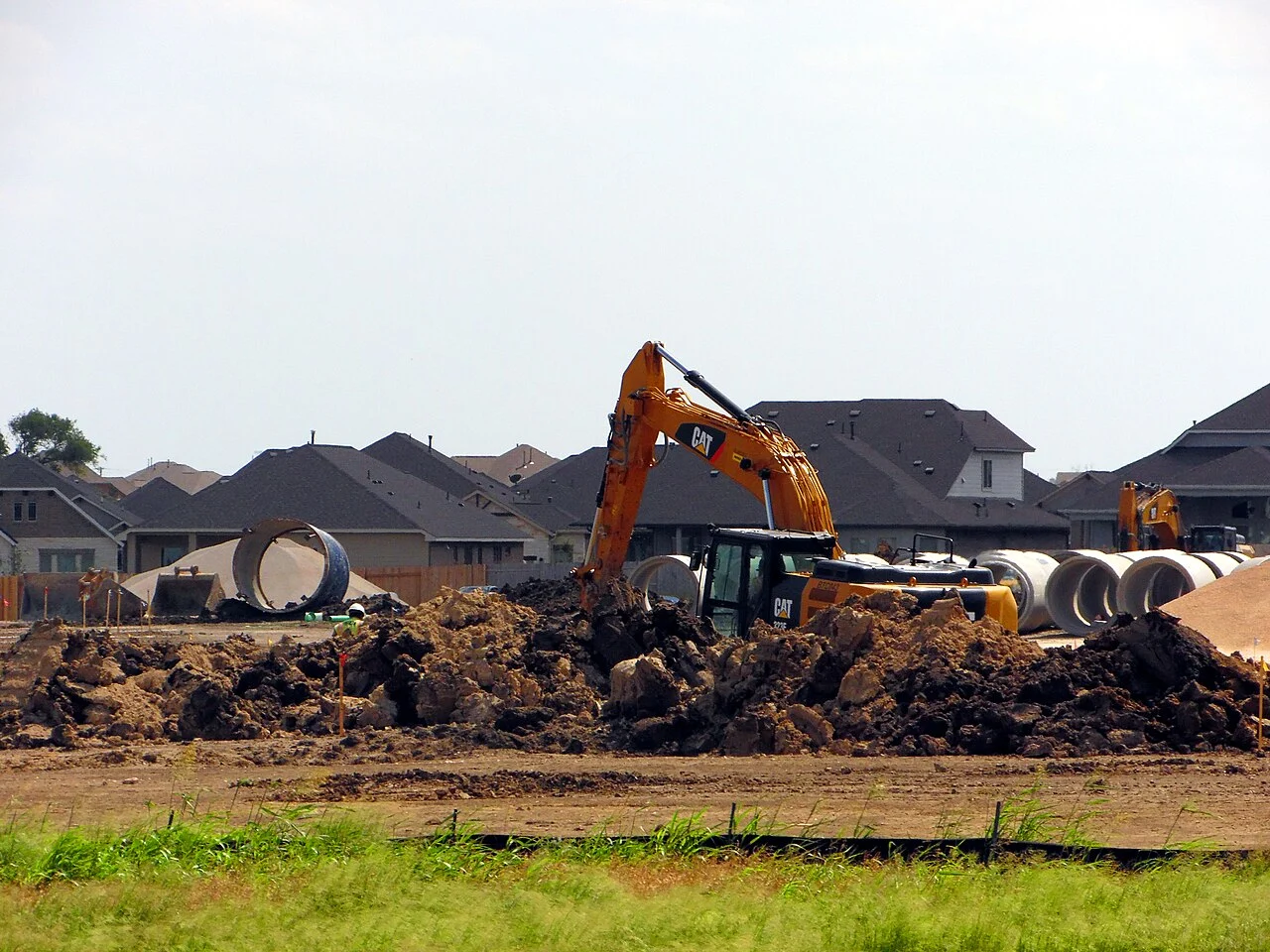
In fast-growing suburbs like Frisco and McKinney, many new lawns go down on soil that was graded and driven over by heavy equipment. The sod sits on a hard layer, roots stay shallow, and the lawn struggles once summer heat arrives.
Our call: core aeration every year or two until the soil loosens, with a compost top-dressing. A spray alone won't break up packed fill.
The puddle that wouldn't drain
A clay lawn near the driveway pools after every sprinkler cycle, and the extra water runs into the street.
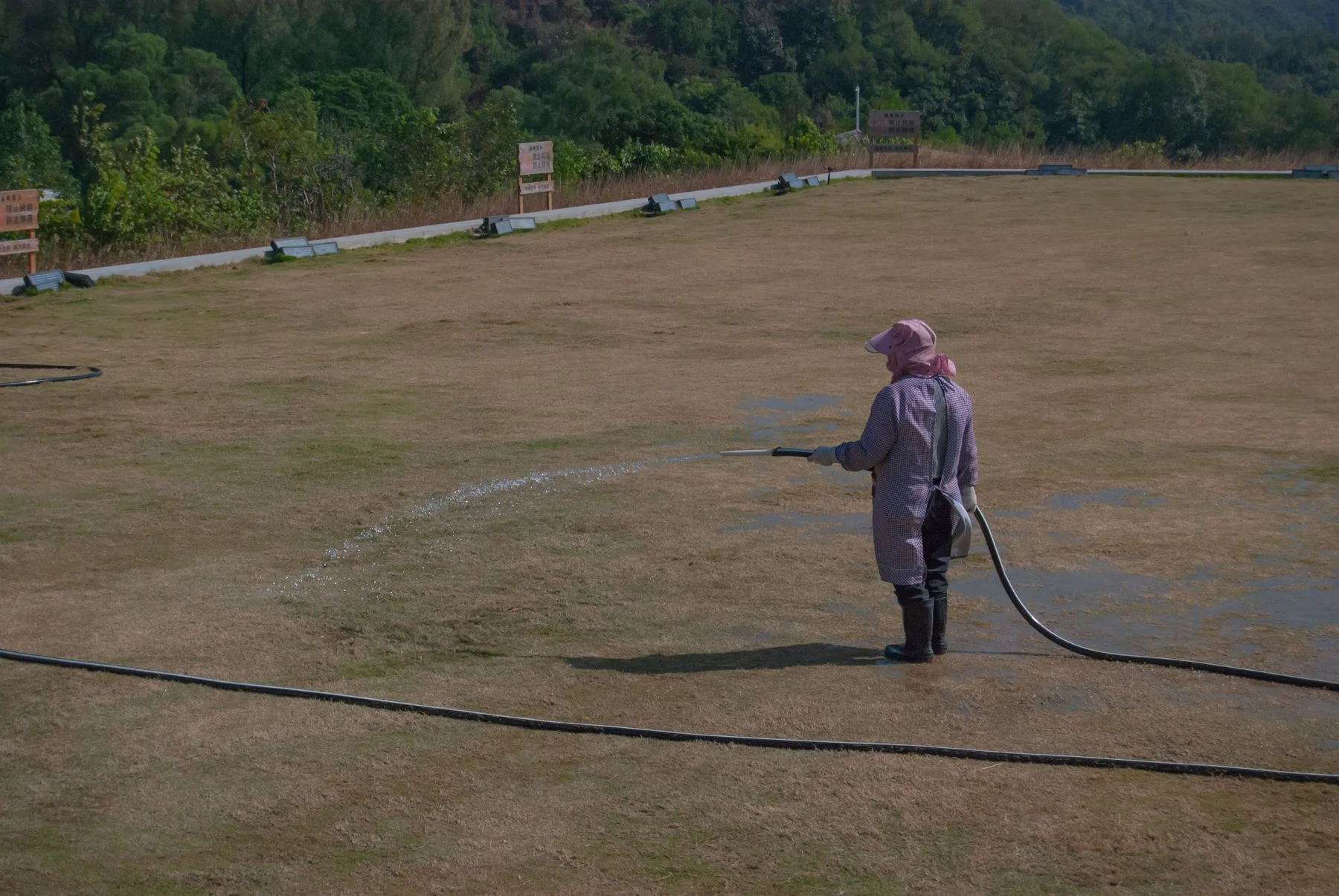
Our call: the one-two punch. Core aerate to open the surface, follow with a liquid conditioner, and water it in. Splitting long sprinkler runs into shorter cycles helps too. Instead of sitting on top, the water now has paths down into the soil.
Quick checklist before you aerate
- Push a screwdriver into moist soil. If it fights you, plan core aeration.
- Note where water pools or runs off.
- Confirm the grass is fully green and growing.
- Water a day or two ahead so the soil is moist, not soggy.
- Mark every sprinkler head, valve box and shallow line.
- Leave the plugs on the lawn to break down.
- Apply any liquid conditioner after core aeration, then water it in.
How Flamingo Pros handles it
Core aeration is part of our early bird offer with the annual lawn plan, and you can also book it on its own. See the plan to get on the schedule for the growing season.
Sources
- Henry et al. (2025). Study of liquid and hollow-tine aeration on TifTuf Bermudagrass, University of Georgia. Agronomy Journal.
- University of Minnesota Turfgrass Science. Home lawn care newsletter, November 2023.
- Nebraska Extension, UNL Water. Getting your lawn ready for summer: aeration.
- University of Maryland Extension. Lawn aeration.
- Texas A&M AgriLife Extension. Bermudagrass home lawn management calendar.
- Texas A&M AgriLife. St. Augustinegrass management calendar.
- Travis County AgriLife Extension. Simple steps to lawn care.
- Ask Extension, Travis County Master Gardeners. Answer on liquid aeration
Photo credits
- Cover: pop-up sprinkler watering a lawn. Q. Hưng Phạm, Pexels, Pexels license (free to use).
- Plug aerator on a lawn: Agri-Fab, Inc., Wikimedia Commons, CC0.
- New-home construction in Pflugerville, Texas: Wikimedia Commons, CC0.
- Gardener watering a lawn: Da Na, Pexels, Pexels license (free to use).
Skip the guesswork every season.
Year-round care
The Pink Plan
Eight seasonal visits a year
Included in plan
- Seasonal fertilization & weed control
- Inspection at every visit
- Treatments timed to your lawn’s needs
- Soil tests at your first and last treatment
- An online Lawn Profile with your soil results
Aeration benefits
- Relieves the compacted clay soil common in North Texas
- Helps air and water reach roots
- Helps treatments absorb into the soil for more consistent, visible results
- Helps your grass stand up straighter
Your price
$129/ month
12 monthly payments, $1,548 a year.
- Lot size
- Up to 15,000 sq ft
- Billing
- Monthly
- + Soil Testing
Regular price $158FREE - + Lawn Core Aeration
Regular price $299FREE
One core aeration a year is part of the plan.


Service
Lawn core aeration
Relieves soil compaction so air, water and treatments reach the roots. Scheduled outside the DFW dormant season.
Learn more about lawn core aerationIdeal window
Size tier
Up to 5,000 sq ft
$249/ one-time
Keep reading
Lawn care built for Dallas-Fort Worth, not anywhere else
Dallas lawn care made for North Texas clay, heat, and watering rules. See how Flamingo Pros builds a custom plan for your grass, soil, and shade.
10 min read · October 22, 2026

Should I water my DFW lawn in winter? And if so, how much?
Should you water your DFW lawn in winter? Yes, but 50% to 75% less. How often to water dormant Bermuda, St. Augustine, and Zoysia, plus freeze tips.
7 min read · October 22, 2026

Guesswork vs. Data: Why Soil Testing is the Secret to a Lush DFW Lawn
Why DFW's alkaline clay makes guessing expensive, the real benefits of soil testing for Texas lawns, and how Flamingo Pros tests your soil when service starts and periodically each year to track soil health.
8 min read · October 20, 2026